

























































Health officials in Oregon are raising the alarm as a third measles case has been reported in Clackamas County, adding to the state's tally this year, said a report by KATU. The afflicted individual, who remains unidentified, was unvaccinated and the authorities are currently investigating to determine if there was any out-of-state travel or connections to the two earlier cases in Linn County. According to KPTV, both prior cases were also in unvaccinated persons, who hadn't traveled out of Oregon.
While the Oregon Health Authority (OHA) has not disclosed any potential public exposure locations for the latest Clackamas County case yet, the concern is evident. As reported by KGW, measles is an extremely contagious disease that can live in the air for up to two hours after an infected person sneezes or coughs. "Measles is more than a rash and fever. It can suppress the immune system and increase the risk of severe disease from other infections," Dr. Howard Chiou from OHA's Public Health Division told KGW, emphasizing the importance of vaccination.
The complications from measles range from ear infections and diarrhea to more severe outcomes like brain swelling, potentially fatal in rare instances. Reacting to the rising cases, Howard Chiou, M.D., Ph.D., medical director for communicable diseases and immunizations at OHA, urged people to get vaccinated as it remains the most effective protection, a sentiment echoed in the aforementioned reports. The measles vaccine MMR's two doses boast a 97% efficacy at warding off the virus, as reported by all three outlets, KATU, KPTV, and KGW.
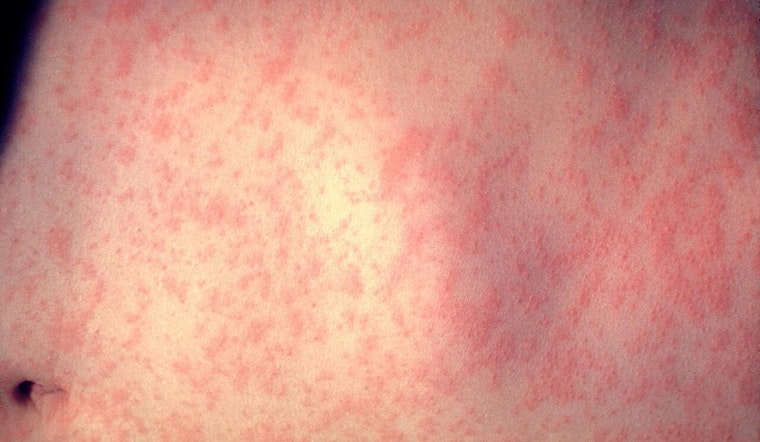
While measles was thought to be eliminated in the U.S. in the year 2000, reported cases have surged in several states in recent years. Interestingly no case yet has been associated with international travel. The uptick has been linked to declining vaccination rates, and just last year, Oregon saw whooping cough cases exceed a 1950 record. Symptomatically, measles present with fever, cough, runny nose, and red eyes followed by a telltale rash. OHA warns that infants, children under 5, adults over 20, pregnant people, and those with compromised immune systems, are the most susceptible, and 1-2 out of every 1,000 measles cases can be fatal in developed countries. People showing symptoms are advised to call ahead before seeing a healthcare provider to mitigate the risk of further exposure, as instructed by KGW.




