

























































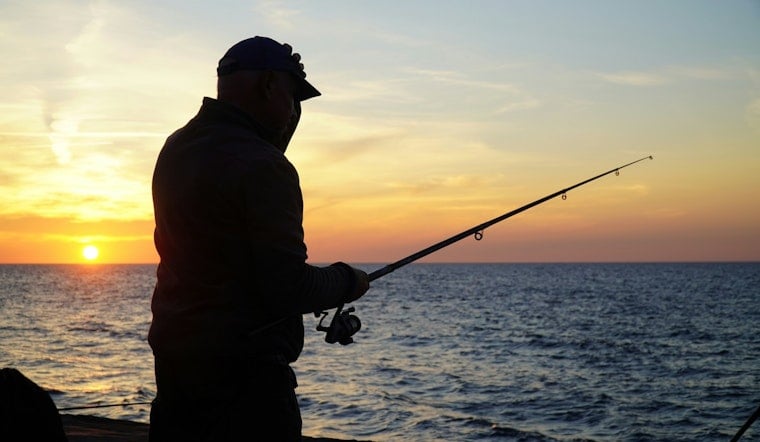
A proposed Oregon constitutional amendment protecting the rights to hunt, fish, farm, trap, ranch and manage wildlife has cleared an early procedural hurdle on its long road toward the November 2028 ballot. The Oregon Secretary of State's Elections Division has referred Initiative Petition 25, known as the Oregon Freedom Amendment, to the state attorney general, who will now draft the measure's official ballot title and summary.
The referral is a required early step in Oregon's initiative process, but as KATU reports, it does not mean IP-25 has qualified for the ballot. The measure has met the initial sponsorship signature requirement under Oregon election law, but supporters must still gather the full number of valid voter signatures required before it can go before voters in 2028. Under Oregon's rules for citizen-initiated constitutional amendments, that threshold is set at 8% of the total votes cast in the state's most recent gubernatorial election — which works out to 160,551 valid signatures, according to Ballotpedia, based on the 2,006,888 total votes cast in Oregon's 2022 governor's race.
Kari Goodheart, a chief petitioner behind the effort, said the amendment would protect people's ability to continue practices that have sustained Oregon communities for generations. Goodheart said supporters believe the state constitution should safeguard hunting, fishing, farming, ranching, trapping, food production, animal husbandry and wildlife management. State initiative records identify the measure, filed as petition 2028-025, as an amendment protecting rights to hunt, fish, farm, trap, ranch, grow food and manage wildlife.
A Response to a Near-Miss Animal Rights Measure
IP-25's creation traces directly back to Initiative Petition 28, an animal rights proposal that sought to significantly expand Oregon's animal cruelty laws and would have effectively banned hunting, fishing and pest control in the state, per the seed reporting. IP-28 was officially disqualified in late July after failing two statistical signature verification checks by the Oregon Secretary of State, finishing about 13,000 signatures short of the 117,173 valid signatures required for the 2026 ballot, according to Northwest Sportsman Magazine. The campaign had submitted 142,784 raw signatures on July 2 but couldn't clear the required validity rate during random sampling.
That near-miss rattled agricultural and hunting groups because it was the third consecutive attempt by Oregon animal rights campaigners to remove statutory animal cruelty exemptions, following IP-13 in 2022 and IP-3 in 2024, both of which also failed to gather enough signatures, as Dairy Herd Management notes. All three efforts aimed to strip long-standing legal exemptions covering animal slaughter, breeding, hunting and pest control. An analysis by Oregon's Legislative Revenue Office found that had IP-28 passed, removing those exemptions would have cost the state more than $3 billion in lost economic output, roughly 14,000 jobs and $390 million in reduced labor income in 2027 alone, according to a report cited by The Bulletin.
A Parallel Push in the Legislature
IP-25 isn't the only track working toward the 2028 ballot. State Sen. Christine Drazan and Republican legislative leaders announced plans, earlier this month, to introduce a 2027 legislative resolution that would refer a similar constitutional amendment protecting hunting, fishing and farming directly to the November 2028 ballot, according to the Oregon Capital Chronicle. A legislatively referred amendment would bypass the citizen signature drive entirely if approved by both chambers during the 2027 session, giving backers a second potential path to the same outcome.
Oregon would join a broader national pattern if either effort succeeds. As of 2026, 24 states have constitutional rights to hunt and fish, with Florida becoming the 24th after voters approved Amendment 2 in November 2024; Arizona remains the only state where voters have rejected such a measure, in 2010, per Ballotpedia. Constitutional right-to-farm protections are far rarer — only North Dakota, in 2012, and Missouri, in 2014, have adopted them, while Oklahoma voters rejected a similar amendment in 2016. IP-25 would make Oregon one of the few states to combine constitutional protections for both farming and outdoor sportsmanship in a single amendment.
What the Amendment Would and Wouldn't Do
The listed activities the amendment covers play a role in Oregon communities, the economy and the state's natural-resource heritage, according to the seed reporting. Recreational fishing, hunting and wildlife watching alone generate more than $1.2 billion in direct participant spending annually across all 36 Oregon counties, per a February 2026 study from the Common Sense Institute. On the agricultural side, federal data shows Oregon has 35,400 farm operations spanning 15.3 million acres, producing more than $5 billion in direct annual agricultural output across over 225 commodities, according to USDA NASS figures.
The legal text of IP-25 includes specific carve-outs meant to limit its scope. The amendment does not authorize trespassing on private property, does not eliminate civil or criminal liability for reckless misconduct, and does not prevent state wildlife agencies from setting hunting seasons, bag limits or conservation rules, according to the IP-25 Oregon Constitutional Freedom Amendment PAC. Backers say those provisions are designed to keep standard wildlife management and private property protections fully intact even as the amendment shields hunting, fishing, farming and related practices from future restriction.
For now, IP-25 supporters face the same steep climb that has tripped up animal rights organizers in three straight election cycles: collecting well over 160,000 verified signatures in time for the 2028 ballot. Whether that happens through the citizen petition, the Legislature's referral process, or both, Oregon voters appear headed toward another statewide reckoning over how far the constitution should go in protecting — or restricting — the state's hunting, fishing and farming traditions.



