

























































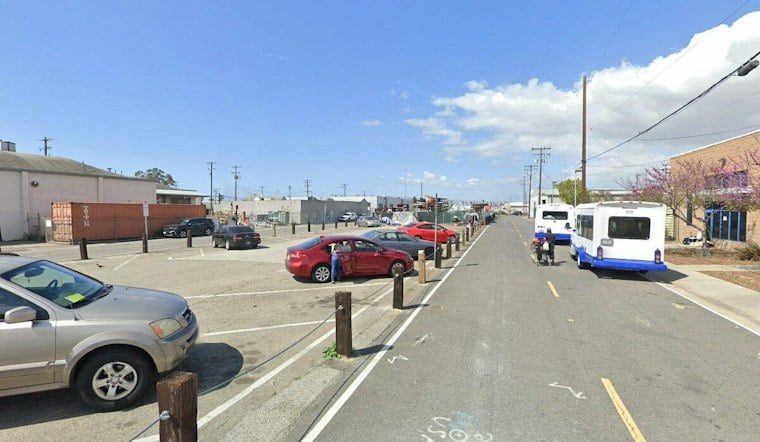
People whose camps were cleared through Los Angeles County's targeted encampment resolution programs were far more likely to still be housed six months later than people who went through a typical camp sweep, according to new research examining the programs between April 2023 and July 2026. But the same research found that these gentler, voluntary programs reach only a small fraction of the county's unsheltered population, raising questions about how far the approach can scale.
The findings come from the Periodic Assessment of Trajectories of Housing, Homelessness and Health, known as PATHS, a joint USC-UCLA study that has tracked a representative sample of unsheltered people in Los Angeles County through monthly surveys since 2021, according to the USC Homelessness Policy Research Institute. As reported by The Oregonian/OregonLive, the PATHS survey tracks nearly 2,000 people experiencing homelessness in the county each month, and researchers added specific questions about the county's new resolution programs starting in 2023.
Those resolution programs, launched as pilots in 2023, aim to shelter or house every person living in a camp by relying on voluntary acceptance of housing-focused outreach rather than threats of closure, per the same reporting. Among 305 study participants who were contacted by a resolution program, half accepted an offer of shelter or housing, OregonLive reported. By contrast, among 744 participants who went through a standard sweep, only 4% accepted a shelter or housing offer, according to the outlet.
A Wide Gap in Who Stays Housed
The outcomes diverged sharply over time. Six months after their camps were cleared, 16% of people who went through a resolution effort were still in shelter or housing, compared with just 1.3% of those who experienced a sweep, OregonLive reported. In raw numbers, that amounted to roughly 50 people sheltered or housed after six months through resolution efforts, versus about 10 people through sweeps, per the same account.
A separate analysis from the USC Suzanne Dworak-Peck School of Social Work, drawn from PATHS data collected between April and September 2023, helps explain why sweeps so rarely lead anywhere. Researchers found that 13% of respondents received a housing offer during a sweep; 9% moved into the offered shelter or housing, and 5% stayed for at least a month, according to USC Suzanne Dworak-Peck School of Social Work researchers. The same analysis found that more than half of the 346 participants surveyed in that window reported experiencing at least one street sweep.
Sweeps also appeared to destabilize people in measurable ways. Participants who experienced a sweep averaged 3.7 location moves during the month of the sweep, compared with 2.0 moves among those who weren't swept that month, the Dworak-Peck researchers found. Survey-based reports more broadly found that sweeps can destabilize people and cause loss of property, community, and connections to services, per OregonLive's reporting.
Researchers Urge Caution Despite Promising Numbers
USC and UCLA researchers concluded that resolution programs were more likely to bring people indoors and connect them with services, and less likely to expose them to enforcement, displacement, and property loss, according to OregonLive. Still, the researchers cautioned that resolution programs reached far fewer people than sweeps overall, describing them as costly, resource-intensive operations that touch only a relatively small share of the county's unsheltered population — which OregonLive reported sits between 70% and 75% of all people experiencing homelessness in the county.
A separate evaluation backs up the broad strokes of that caution while adding nuance. Abt Global researchers studied three place-based encampment resolution efforts in Los Angeles County between 2022 and 2024 using a mixed-methods design, and found that rates of transition to permanent housing across the three sites ranged from 20% to 34%, according to a brief hosted by the Hilton Foundation. Those efforts, the brief notes, prioritized voluntary participation and avoided punitive enforcement.
Even those stronger-performing programs ran into a familiar wall: a shortage of permanent supportive housing and housing subsidies, the Hilton Foundation-hosted evaluation found, with some participants cycling back into unsheltered homelessness or other temporary settings once interim housing ended. The evaluation also covered efforts in Long Beach and the San Fernando Valley.
The Bigger Picture on Homelessness Trends
Zooming out, the county's unsheltered population fell 14% since the new interventions began and the broader homelessness rate dropped 4% between 2023 and 2025, OregonLive reported. The Los Angeles Homeless Services Authority separately reported that unsheltered homelessness in the county decreased 9.5% in 2025 and had fallen 14% over two years, a trend the agency called a continuing pattern in its own Los Angeles Homeless Services Authority announcement. The USC-UCLA PATHS panel separately found little change over the prior year in overall rates of shelter or housing, even as it tracked considerable churn, with 53% of participants leaving the streets at some point, according to the USC Homelessness Policy Research Institute. That same report found permanent housing, once accessed, was retained by more than 90% of respondents — though only 7% of the sample managed to access it at all.
The contrast with Portland is stark in OregonLive's reporting. The city clears about 600 camps a month based on resident complaints and independent evaluations of camp conditions, but does not track where people go in the months after those clearances, according to the outlet. Portland's homeless population grew between 2023 and 2025, and unsheltered people make up about 50% of that population, compared with the 70% to 75% share reported in Los Angeles County, per OregonLive's reporting.
Portland's own enforcement data, reported separately, shows a mixed picture after a year of its camping ban. More than 600 people agreed to move into shelter instead of receiving a citation, while roughly 1,000 others declined shelter during camp removals over the past year, according to Oregon Public Broadcasting. The outlet also reported that the city issued 120 citations and charged 58 people in that first year of enforcement, with zero convictions recorded so far.



