

























































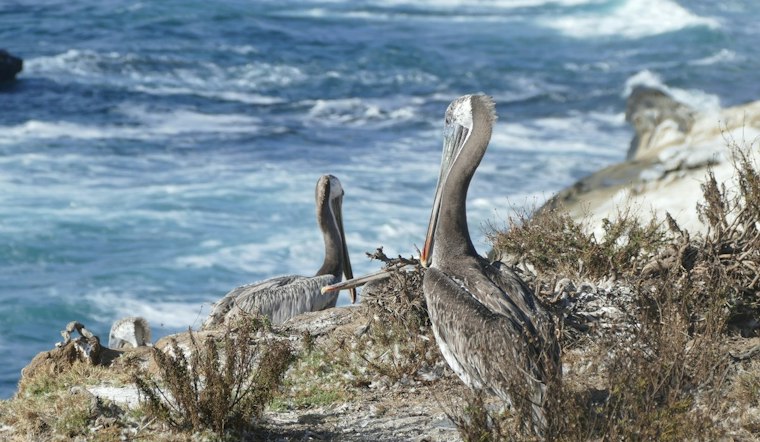
Masses of California brown pelicans packed the ocean piers of Bandon on Oregon's southern coast Friday and Saturday, crowding the docks just as a powerful storm barreled toward the region. By Sunday morning, nearly all of them were gone.
One Bandon resident, Michael Burke, estimated there were more than 2,000 pelicans on the docks Friday, according to OregonLive. A different estimate came from a local photographer, whose husband put the number closer to 1,000, according to BeachConnection. The two counts don't match, and nothing in the available reporting pins down an exact number — but either way, it was a lot of pelicans.
The spectacle arrived alongside serious weather. The storm was forecast to bring winds of up to 75 miles per hour to the southern Oregon coast Saturday and into early Sunday, per the same OregonLive account. Separately, a high surf warning was in effect for the central Oregon coast through noon Saturday, with breakers expected to top 30 feet, according to OPB.
Why So Many Birds Showed Up at Once
A spokesperson for the Bird Alliance of Oregon said the pelicans were most likely in the middle of their annual migration south to Southern California and the Baja Peninsula in Mexico, the station's report noted. That same spokesperson suggested a storm arriving after a long stretch of nice weather may have led to an unusually large bottleneck of migrating birds — though the reporting frames that as a possible explanation rather than a confirmed cause.
The behavior itself isn't out of character for the species. Brown pelicans are often seen foraging in large flocks just offshore during spring, summer and fall, then moving toward warmer waters as winter sets in, according to the Oregon Coast Aquarium. The Oregon Department of Fish and Wildlife has likewise said large flocks sometimes gather during migration, per the BeachConnection article.
Then, By Dawn Sunday, Almost Nothing
As quickly as the birds arrived, they left. Jim Proehl of the Bandon History Museum said he counted only three pelicans on the docks Sunday morning, telling BeachConnection, “He only counted three on the docks this morning,” in a description of the dramatic overnight shift.
Large pelican gatherings aren't unheard of on the Oregon coast, even if this one stood out. In January 2010, marine biologists reported hundreds of brown pelicans lingering along the coast during winter, and a U.S. Fish and Wildlife seabird specialist at the time called the numbers unprecedented in his experience, saying, “This is the most we've ever seen here in January,” according to a separate OregonLive report from that year.
A Broader Shift in Pelican Patterns
Research adds some context to why these clusters happen at all. A 2016-2019 survey of California brown pelicans at nearshore communal roosts along the U.S. West Coast recorded as many as 22,000 birds at up to 89 sites, according to a study published via Marine Ornithology through the University of South Florida. The same study found that the pelicans' fall distribution had shifted north compared with historical records, with a hotspot emerging around the 37th parallel — a pattern researchers linked to broader climate trends.
Older records referenced by the U.S. Geological Survey indicate brown pelicans have appeared regularly along parts of the Oregon coast from August through November going back decades, including a historical high count of 110 birds cited in older survey work. For now, whatever drew Bandon's visitors together, and whatever sent them on their way just as fast, the docks are back to something closer to normal, with just a handful of pelicans left behind.



