

























































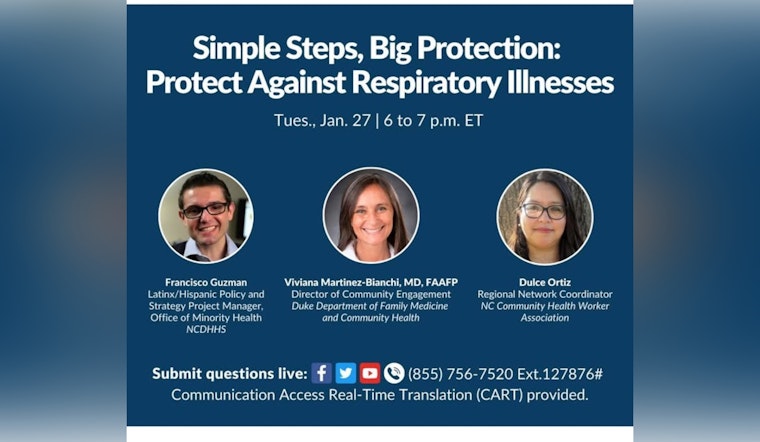
To address the escalating toll of respiratory illnesses on North Carolinians, the North Carolina Department of Health and Human Services is stepping up with a Spanish-language Cafecito and tele-town hall in collaboration with LATIN-19 and Duke Department of Family Medicine and Community Health. The event, which offers guidance on prevention and vaccines, including those for flu, COVID-19 and RSV, is scheduled for today from 6 to 7 p.m., aimed particularly at safeguarding Hispanic and Latino communities from these health threats, as per the NCDHHS.
The livestream scheduled to run on the NCDHHS Facebook, X, and YouTube platforms, facilitates direct dialogue with health experts like Francisco Guzman from the Office of Minority Health and Health Disparities and Viviana Martinez-Bianchi, MD, of Duke Department of Family Medicine and Community Health, while Dulce Ortiz from the North Carolina Community Health Worker Association will also join in, emphasizing the simple steps to ensure protection against these illnesses and during the event, viewers can pose questions and those preferring the tele-town hall can dial in via phone to contribute to the conversation.
The NC Respiratory Virus Surveillance Dashboard shows 181 flu-related deaths so far this season, including children, highlighting the importance of protective measures. Health organizations like the American Medical Association and the American Academy of Pediatrics continue to emphasize the effectiveness of vaccines in preventing severe illness.
Events like Cafecito and tele-town halls provide information on vaccinations, hygiene practices, and how to access health care providers who offer services in Spanish. The NCDHHS notes that regular handwashing, covering coughs, and sanitizing shared surfaces help reduce the spread of respiratory viruses. Vaccines remain the most effective way to prevent serious illness, while testing and treatment are important for managing symptoms and limiting community transmission.
The NCDHHS offers Spanish-language resources, including the Vaccines for Seasonal Respiratory Illnesses webpage and a bilingual Respiratory Illness Communications Toolkit. These resources help ensure that uninsured or underinsured individuals can access vaccinations at low or no cost, reducing barriers to important health protections.



