

























































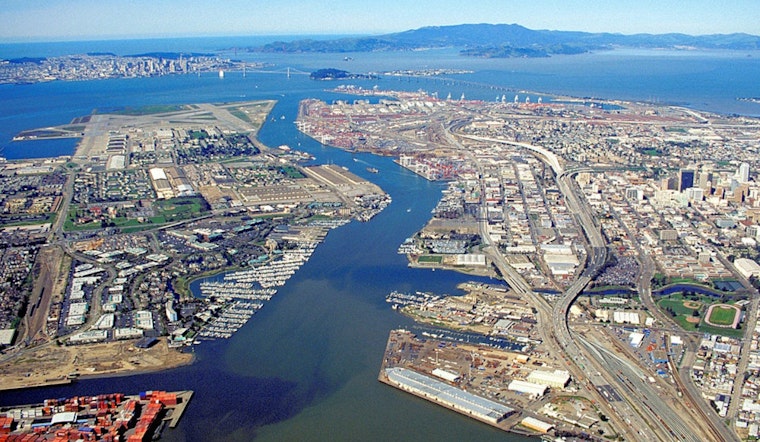
The Port of Oakland has narrowed the search for a redeveloper of Howard Terminal to two finalists: the Oakland Roots Sports Club and Industrial Realty Group. The move refocuses attention on the 55-acre waterfront parcel that was once tied to an A’s stadium effort now abandoned.
As reported by NBC Bay Area, the Port named the Roots and Industrial Realty Group as the two finalists and will move into exploratory negotiations with both parties. That sets up a direct choice between a sports-centered redevelopment and a commercial maritime plan for the site.
Roots' two-phase stadium proposal
Oakland Roots first filed a proposal for Howard Terminal in December 2024 and describes a two-stage plan that would begin with a modular 15,000-seat temporary stadium and later expand or convert to a permanent 25,000-seat venue, according to the club. The Roots also outlined the sequencing and timing of the modular approach on the team’s website, and Sports Business Journal reported the club pegged the initial modular phase at roughly $129 million while noting a permanent build could take years to finance.
Industrial Realty Group's commercial pitch
By contrast, Industrial Realty Group, a Los Angeles-based developer, is reported to favor converting Howard Terminal into a maritime commercial and logistics operation rather than a sports complex, a plan that would prioritize commodity handling and related industrial jobs. That competing vision frames the decision as a tradeoff between waterfront industrial activity and an entertainment-anchored redevelopment, as NBC Bay Area reported.
What happens next
The Port is expected to move into an exclusive negotiation phase with the finalists while it evaluates terms, environmental implications and community input, and reporting suggests a formal selection could still take months. The Real Deal and other outlets note the process typically includes extended reviews and negotiations before a final agreement is reached.
Why the site is back in play
Howard Terminal was the waterfront site targeted by the Oakland A’s before that stadium effort collapsed and the team ultimately relocated; Reuters reported the A’s left after failed stadium negotiations. With the A’s gone, the Port reopened the site to proposals that span sports, industrial and mixed-use concepts, reviving longstanding debates about jobs, traffic and shoreline access.
Oakland Roots executives welcomed the Port’s move and framed their submission as a locally grounded plan. Oakland Roots Sports Club added that a modular first phase would let the teams begin hosting larger crowds while pursuing long-term financing for a permanent stadium.
Neighborhood groups, maritime businesses and city officials will be watching the Port’s next moves closely as the finalists enter negotiations, since the ultimate choice will shape jobs, public access and the character of Oakland’s Jack London Square waterfront for years to come.





