

























































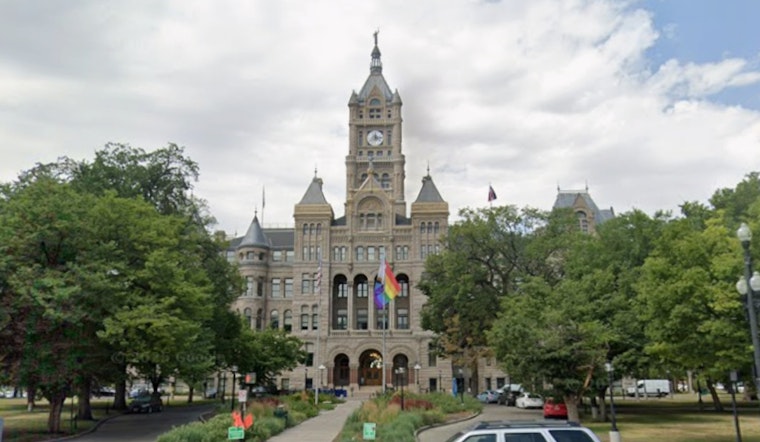
Salt Lake City council members turned up the pressure Tuesday on developers pitching a mixed-use tower at 265 East 100 South, a 2.19-acre parcel just east of downtown. During a public briefing, councilors pushed for more specifics on how construction would be managed next to historic St. Mark’s Cathedral and for firmer guarantees on community benefits before they sign off on an upzone. Developers argued they need Central Business District (D-1) zoning to stack hundreds of units on the site, while city staff has suggested a 225-foot height cap as a possible compromise that aims to balance downtown-style growth with the nearby neighborhood.
What the proposal would build
According to the Salt Lake City Planning Division, the project would replace a three-story office building and surface parking with roughly 421 residential units split between a high-rise tower and lower podium buildings. The plans call for about 491,400 square feet of residential area and roughly 24,000 square feet of commercial and amenity space on the first two floors. The filing also describes a 35,000-square-foot publicly accessible courtyard, underground parking with a near 1:1 parking goal, and community benefits that reserve 20% of units for households at or below 80% AMI while allocating about 8% of units as three-bedroom family apartments.
Zoning, height, and the planning commission
The development team has asked the council to rezone the property from MU-8 to the Central Business District (D-1), a change that would allow much taller construction than the current MU-8 envelope. As reported by KSL, the Salt Lake City Planning Commission voted 7-1 in October to advance the rezone with staff’s recommended condition capping the site at 225 feet as a compromise between downtown heights and neighborhood scale. D-1 zoning typically has no fixed maximum height, although projects above roughly 200 feet trigger design review, a technical nuance that has councilors pressing for clearer protections for adjacent properties before they let this tower push upward.
Neighbors and the cathedral
Nearby residents and representatives of St. Mark’s Cathedral told council members they are worried about vibration from construction, shadowing, and potential effects on the church’s rooftop solar arrays. The cathedral’s own site notes that the solar plant began generating power in early March 2021. Councilmember Eva Lopez Chavez told Building Salt Lake that those panels currently supply roughly 53% of the church’s electrical needs, and developers said they would work with the church, including offering to relocate or reimburse panels if they are impacted.
Council reaction and next steps
The council did not take a vote at Tuesday’s briefing but set a public hearing for Feb. 3 to accept comments on the rezone and related zoning text amendments. The formal meeting notice lists Feb. 3 at 7 p.m. for public comment and names Feb. 17 as a tentative date for council action. City staff also emphasized that a development agreement tying any capped height, construction mitigation measures, and community benefits would need to be negotiated and signed by both the developer and the city before construction could proceed. Utah Public Notice provides the council agenda and timeline, and the project narrative outlines the development agreement requirement.
Why it matters
Developers told the council that the upzone request is driven in part by the region’s housing shortage and a desire to maximize units on a rare 2.19-acre downtown parcel, a rationale repeated in the project materials and at the briefing. That argument has sharpened the debate over tradeoffs: councilors want concrete, enforceable commitments on affordability, family-sized units, and construction mitigation before they are willing to authorize an upzone.
What to watch next
The Feb. 3 public hearing will be the council’s next chance to hear community testimony and for staff and the developer to further flesh out a development agreement. If you are following the case, watch for that negotiated agreement to spell out the final height cap, mitigation measures for St. Mark’s, and the fine print on the affordability commitments.





