

























































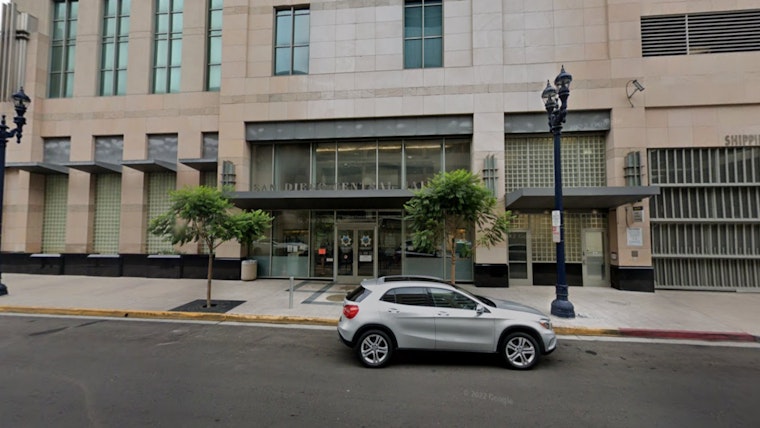
For now, San Diego County can continue to detain people in its isolation-style "administrative separation" units. A federal judge has refused to limit the practice, denying a motion that attorneys said was urgently needed after two recent in-custody deaths. The ruling leaves the sheriff's current policies in place as both sides head into a settlement conference this week.
U.S. District Judge Anthony Battaglia turned down the plaintiffs' request for a preliminary injunction, according to Justia. The motion asked the court to block the county from placing people with serious mental illness in administrative separation units except in true emergencies, and to limit any such placements to 72 hours.
The injunction bid was filed in October by Rosen Bien Galvan & Grunfeld on behalf of a jailwide class. It included more than a dozen sworn declarations that described cells with overflowing toilets, trash piling up and virtually no human contact. After touring county facilities, plaintiffs' expert Dr. Pablo Stewart concluded that the administrative separation units are "among the harshest and most restrictive forms of solitary confinement." Local reporting has echoed those accounts with stories of prolonged isolation, as covered by KPBS.
The motion was driven in part by two deaths in July 2025: Corey Dean at the Vista Detention Facility and Karim Talib at the Central Jail. Both cases triggered wrongful-death lawsuits and official reviews. The Dean family's suit was reported by the Times of San Diego, while the San Diego County Sheriff's Office has posted updates on the Taliban investigation. Plaintiffs and local coverage have also highlighted that roughly 250 people, about 6 percent of the jail system's population, are currently held in administrative separation, according to The San Diego Union-Tribune.
How the judge reached his decision
In his written order, Battaglia said the plaintiffs had not met the demanding Winter test for mandatory injunctive relief and pointed to the Prison Litigation Reform Act's requirement that any court-ordered fix be narrowly tailored. Those rules, he wrote, limited what he could do on a preliminary record. He also noted that the court could not resolve sharply disputed credibility questions based only on declarations and reports, and that jail security judgments are generally entitled to deference. Issues about classification, mental health care and supervision, he said, should be sorted out through cross-examination and a full trial record, according to Justia.
What’s next in the case
Attorneys for both sides are scheduled to meet for a settlement conference on Friday, Jan. 16, with a pretrial conference set for late May if they do not reach a deal, as reported by The San Diego Union-Tribune. If the case moves forward, the denial of emergency relief means the core questions about how San Diego classifies, houses and treats people in its jails will likely be decided either at trial or through a broader settlement.
Plaintiffs' lawyers say the fight is far from over and that families involved are pushing for structural change, not just one-off policy tweaks. Rosen Bien Galvan & Grunfeld has said its goal is to bring the county's jail practices in line with constitutional standards. Meanwhile, families have filed separate wrongful-death suits that are expected to surface related evidence and testimony in open court, according to the Times of San Diego.




