

























































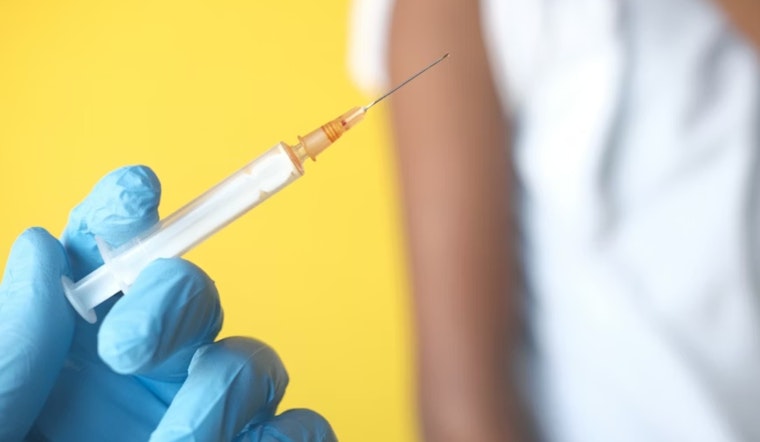
San Diego County is cutting it close on measles protection. Vaccination coverage among schoolchildren sits at roughly 94%, just under the 95% herd-immunity level most public-health experts say is needed to prevent outbreaks. Dozens of local schools, both public and private, fall below that benchmark, creating pockets where measles could spread if the virus is introduced.
Where San Diego Stands
Countywide rates have crept up since the pandemic, but they still fall short of the threshold used to blunt measles transmission. As reported by Axios, dozens of San Diego schools show MMR coverage below 95%, leaving the county’s combined rate at about 94% for the 2024–25 school year.
National Picture
San Diego’s shortfall is not an outlier, it mirrors a nationwide pattern. An interactive analysis by The Washington Post found only about 815 U.S. counties meet the 95% benchmark for kindergartners, and at least 5.2 million kindergarten-age children live in counties below that level. The Post’s mapping of school and county records tracks the erosion of coverage since the pandemic and highlights geographic clusters where outbreaks could take hold.
The CDC’s Latest Numbers
Federal surveillance points in the same direction. Data compiled and released by the Centers for Disease Control and Prevention, summarized by AHA News, show MMR coverage among kindergartners dropped to roughly 92.5% in the 2024–25 school year while exemptions and missing documentation rose. Public-health experts warn that even a few percentage points of decline shrink the margin of safety for measles, one of the most contagious human diseases.
What County Officials Say
The county’s Immunization Unit says it follows the American Academy of Pediatrics schedule and is “committed to ensuring residents continue to have access to safe and effective vaccines that are based on credible, transparent, and science-based evidence,” language posted on the San Diego County website. The agency points to school-based outreach, partnerships with community clinics and regularly published clinic locations as tools to help families catch up, according to the San Diego County Health and Human Services Agency.
Where the Gaps Are
Most schools in the county meet or exceed the 95% target, but a school-level review detailed by Axios shows that the relatively small group that does not is enough to drag the county average down. Those underimmunized campuses, sometimes clustered by neighborhood or by status as private schools, create the pockets that could fuel a local outbreak if measles arrives.
Policy Context
California eliminated non-medical vaccine exemptions for school entry after the 2014–15 Disneyland outbreak, a policy shift that raised statewide coverage but, researchers say, led to replacement effects such as more medical exemptions and clusters of underimmunized students. A 2019 analysis published in Pediatrics found that while SB277 reduced personal belief exemptions, other mechanisms still allowed some children to enter school unvaccinated, keeping vulnerability concentrated in certain neighborhoods.
What Parents Can Do
Parents are being urged to pull out those yellow cards and check their child’s immunization record. Two doses of MMR are the standard before kindergarten, and families should contact their pediatrician or county clinics if shots are missing. San Diego County posts clinic locations and community-partner events on its immunization page, and school nurses can help families navigate conditional-admission rules and catch-up schedules, according to San Diego County Health and Human Services Agency.
Public-health officials say closing even small gaps in coverage matters because measles spreads extremely easily and exploits local clusters of underimmunized children. County leaders and pediatricians are pressing families to check records and get children caught up before spring gatherings increase exposure risk.



