

























































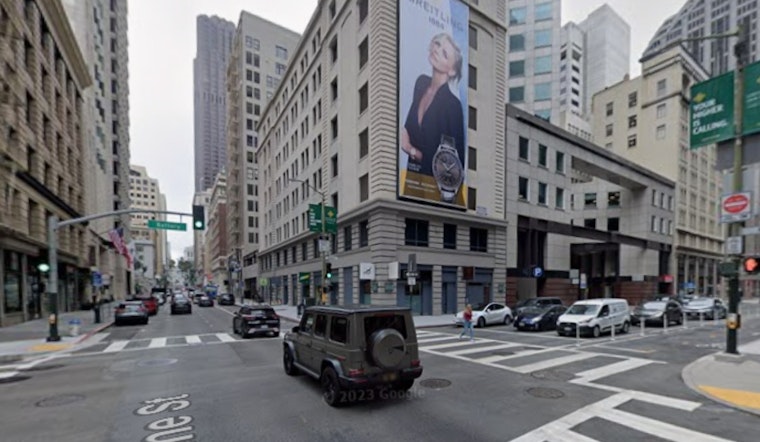
Another Financial District office building just found a new local owner. Rubicon Point Partners has picked up the eight-story property at 200 Pine Street, adding to its San Francisco portfolio and extending a recent buying streak that is turning heads in the city’s slowly recovering office market.
According to CoStar, Rubicon Point Partners closed on the deal on Jan. 6. The building had not changed hands since the late 1990s, and the purchase is being viewed as part of a broader push by local investors chasing value-add office plays downtown.
Public listing materials show the property spans roughly 49,000 to 49,463 square feet across eight stories and includes ground-floor retail. Marketing on LoopNet highlights smaller, right-sized floor plates pitched as a good fit for small and mid-sized tenants. The building was framed as a lease-up opportunity with immediate cash-flow potential and room for upgrades.
Rubicon, a San Francisco investment and operating firm, has been busy around the city. In 2023 it acquired The Townsend Building across the Embarcadero, per a release from Business Wire. The company also announced the first close of Rubicon Point Fund II in 2025 as a vehicle to pursue special-situation deals along the West Coast, according to a company release distributed via GlobeNewswire.
Industry watchers say trades of smaller, well-located office buildings line up with recent signs of a San Francisco office rebound, including more leasing from smaller tenants and AI-focused firms, as reported by GlobeSt. Market data tracked by S&P Global indicates that vacancies have eased off their recent highs, which in turn makes value-add strategies more appealing for investors willing to take on some work.
Rubicon’s own materials describe a thesis-driven, data-forward approach that targets properties with “situational” complexity and upside. That kind of playbook helps explain why a buyer would go after a long-held downtown building that still needs leasing and capital improvements instead of a fully stabilized, turn-key asset.
What This Might Mean For Downtown
Because the building had not traded in decades, some brokers say the sale underscores investor appetite for overlooked assets that offer a clear leasing path. According to CoStar, the property last changed hands in the late 1990s, and its listing on LoopNet calls out ground-floor retail and floor plates that many small tenants prefer.
For now, Rubicon’s latest move is another signal that capital is flowing back into select corners of the Financial District, especially for properties that can be leased up or modestly repositioned. We will update this story as leasing plans or tenant commitments emerge.





