

























































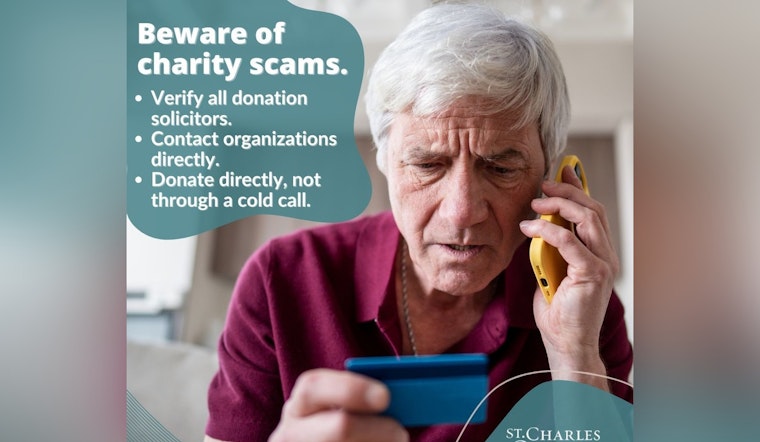
With the commencement of a new year, charitable giving becomes front and center in the minds of many with a penchant for philanthropy. The St. Charles County Public Health's recent post on social media shines a spotlight on a less savory aspect of this seasonal generosity: the rise in scam artists. As reported, these fraudsters have honed their ability to exploit goodwill through the creation of counterfeit donation platforms, unsolicited calls that seem genuine, and illegitimate collections via financial apps.
The St. Charles County Public Health authority warns, "It's easy for these tricksters to make false donations sites, place fraudulent phone calls, or wrongfully collect money through financial apps." Evidently, the ease with which these scams are perpetrated is only matched by the simplicity of their schemes—a clear reflection of the dark side of human ingenuity. To combat this issue, the organization urges due diligence. You’re encouraged to validate unsolicited requests, especially those soliciting financial support, embodying a sense of social responsibility.
To ensure your donation reaches its intended target and not the coffers of a con artist, the St. Charles County Public Health post provides a series of clear-cut verification methods. "If you receive an unsolicited call or request, be sure to verify that it's authentic," the statement advises. Essential to this process of authentication is contacting the charity through their publicly posted phone numbers or making a contribution via check or online payment using details sourced directly from the charity's verified website.
Division has been a historical constant, finding unity in caution when facing potential scams is a rare unifier; a reality mirrored in the Public Health's directive. To safeguard your contributions, they recommend mailing a check directly to the charity at its publicly listed mailing address, "or make online payments accessed directly from an organization's verified website." Doing so will ensure the aid you aim to provide is not misdirected by crafty impostors, but makes its way to those truly in need of support, according to the St. Charles County Public Health.


