

























































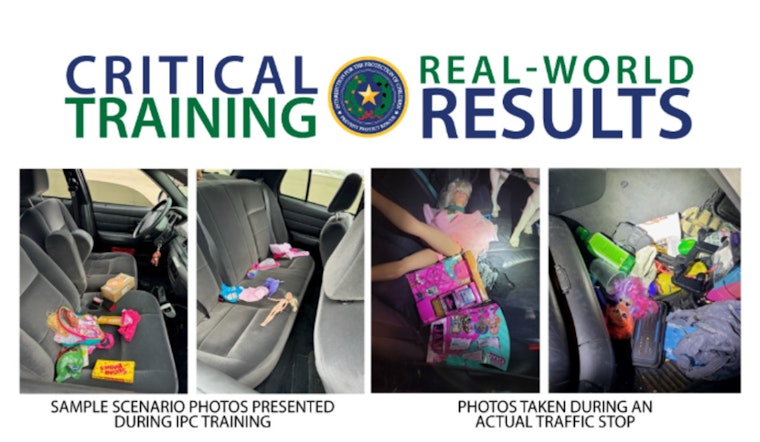
A routine traffic stop on a Texas highway on Thursday led to an arrest after a Texas Department of Public Safety trooper used child-protection training to identify behavior DPS described as concerning and began an investigation. DPS said the case involved its Interdiction for the Protection of Children program and later released photos taken during the stop to illustrate how the program works. The agency said no child was found inside the vehicle.
Trooper Spots Indicators, DPS Says They Were Too Alarming To Ignore
According to a Facebook post from Texas DPS, the trooper saw several signs inside the car that lined up with Interdiction for the Protection of Children guidance. DPS says the trooper acted on those indicators, removed what the agency described as a “potential risk,” and then pulled in investigators for follow-up. The post, including its caption and the shared photos, was framed as a real-world example of how IPC techniques can turn a routine traffic stop into a deeper probe. The agency did not release the arrested person’s name or list any formal charges in the post.
Inside the IPC Playbook And What DPS Says It Has Done So Far
The Interdiction for the Protection of Children curriculum trains officers to look at the totality of the situation, focus on subtle warning signs, and loop in child-protective services and investigators whenever a child might be at risk, as reported by the Texas DPS. In a recent department release, DPS said the IPC program has led to hundreds of rescues and investigations across the state, reporting that more than 640 children have been helped and that there have been over 400 related investigations in recent counts. The agency describes IPC as a proactive, victim-centered way to approach interdiction. Earlier coverage of DPS training expansion noted the program’s growth and additional officer training in 2025, as per Hoodline.
What Comes Next After The Highway Arrest
For now, DPS is keeping the details close. The social media post confirms there was an arrest tied to the trooper’s IPC-driven follow-up, but it does not spell out the charges or outline what comes next for prosecutors. The agency instead spotlighted the traffic stop as a showcase of IPC at work and repeated that no child was inside the vehicle during the encounter. If a local prosecutor files charges, more information about the alleged offenses and the person taken into custody is expected to surface through court filings and public records.





