

























































Two federal lawsuits backed by allies of former President Donald Trump are moving through the courts, and their outcomes could affect who is counted in the 2030 census and how political power and federal funding are allocated. One case challenges the Census Bureau’s statistical and privacy methods from 2020, while another seeks to exclude undocumented immigrants from apportionment totals. Together, the cases could shift House seats and redirect federal funds that Texas communities depend on.
The Florida lawsuit, filed by America First Legal, asks federal judges to block the Census Bureau from using “differential privacy” and group-quarters imputation in future counts and to revisit the 2020 numbers. The plaintiffs argue these tools distorted local counts, diluting citizens’ representation, and want them barred from use in 2030.
A separate federal case in Louisiana, filed by four Republican state attorneys general and joined by the Federation for American Immigration Reform, seeks to exclude undocumented immigrants from the population totals used to draw congressional districts, according to MySanAntonio. The lawsuit continues earlier Republican efforts to limit apportionment to citizens or legal residents and raises questions about how the next decade’s population counts will affect political power.
The Methods Under Fire
The Florida challenge targets two technical fixes the bureau rolled out in 2020. Differential privacy deliberately adds statistical “noise” to block-level data to protect respondents’ confidentiality. Group-quarters imputation estimates the number of residents in dorms, nursing homes and other communal living facilities when direct counts fall short, as explained by The Washington Post.
Plaintiffs say those methods altered local population tallies and the balance between rural and urban areas. Defenders counter that they were essential to protect privacy and to salvage usable data after the pandemic scrambled on-the-ground counting.
What It Would Change
If judges block the bureau’s tools or order noncitizens removed from apportionment totals, the political map could shift and huge sums in federal spending could follow. The Associated Press notes that census figures guide the distribution of roughly 2.8 trillion dollars in federal funding each year, a financial current that flows through virtually every level of government.
As Pew Research Center reports, the largest shares of unauthorized immigrants live in California, Texas, Florida and New York. Any change to who gets counted for apportionment would therefore have an outsized impact in those states, including Texas.
Where The Bureau Is Headed
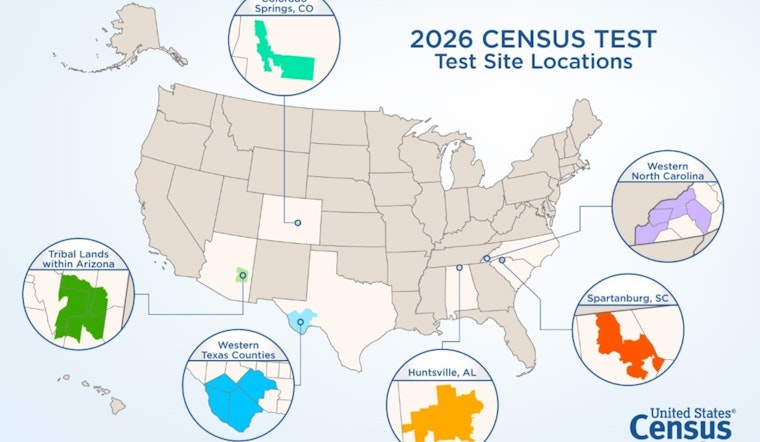
The Census Bureau is not waiting on the courts to map out 2030. It plans a 2026 Census Test in six locations, including a site in western Texas, to try out online response tools, new approaches to counting people in group quarters and other field operations that could shape the next decennial count, according to the Census Bureau. Officials say those dry runs are meant to refine procedures long before the 2030 head count gets underway.
What’s Next In Court
The litigation is already active. America First Legal has filed motions for summary judgment and amended its complaint to add more plaintiffs, while Democratic-aligned intervenors represented by Elias Law Group have asked to join the case to ensure the bureau’s position is vigorously defended, according to reporting by The Associated Press.
Lawyers for the Justice Department have at times urged judges to pause or dismiss parts of the litigation while new department leadership reviews its stance. In the Louisiana case, court filings say lifting a stay “is not appropriate” while the bureau prepares for the 2030 cycle, signaling that the federal government is in no rush to lock in big legal changes while its own planning is still underway.
Legal Stakes And The Constitution
At the heart of the fight is how to read the Constitution and federal law. Section 2 of the Fourteenth Amendment instructs the federal government to count “the whole number of persons in each State,” while 13 U.S.C. section 195 limits the use of statistical sampling when determining apportionment totals. Courts will have to sort out how those provisions interact as they decide what remedies, if any, to impose.
Readers can find the text of the Fourteenth Amendment at constitution.congress.gov and the statute through Cornell’s Legal Information Institute.



