

























































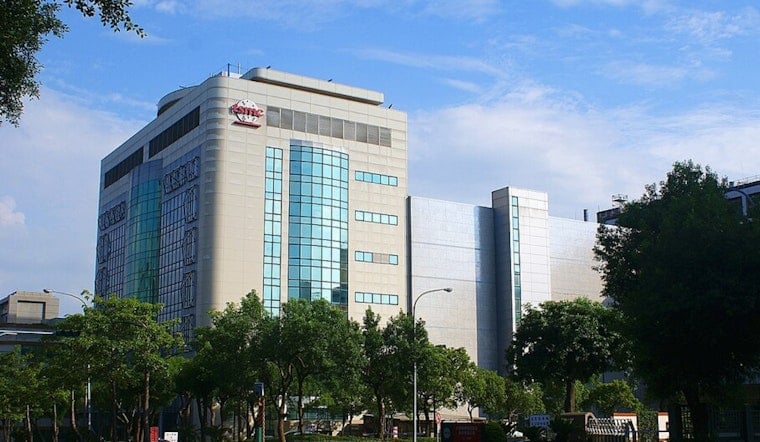
The United States and Taiwan yesterday rolled out a sweeping trade-and-investment framework that ties lower U.S. tariffs on Taiwanese goods to at least $250 billion in new Taiwanese investment in American technology industries. The deal caps reciprocal tariffs at 15 percent, carves out certain imports, and links relief to new U.S.-based projects in semiconductors, AI, and energy. The timing was no accident: the announcement landed as Taiwan Semiconductor Manufacturing Co. reported stronger-than-expected quarterly profits and signaled a sharp increase in 2026 capital spending.
How the pact works
The U.S. Department of Commerce is pitching the arrangement as an "economic partnership" that will create several "world-class" industrial parks to expand domestic semiconductor capacity and related supply chains, according to a fact sheet from the U.S. Department of Commerce. The fact sheet says the reciprocal tariff rate on Taiwanese goods will be capped at no more than 15 percent and that categories such as generic pharmaceuticals and aircraft components will be tariff-free. It also lays out preferential rules under Section 232 that are meant to reward Taiwanese companies that build new U.S. production capacity.
Money and strings attached
Under the framework, Taiwanese companies, backed by government credit guarantees, will commit at least $250 billion in direct investments to expand advanced chips, AI and energy production in the United States, according to reporting credited to Reuters. The package reportedly includes an additional $250 billion in Taiwanese credit guarantees intended to spur further investment and sets out temporary import allowances for firms that are building U.S. fabs. The initial details surfaced in an AP dispatch carried by The San Diego Union-Tribune, before officials filled in more of the fine print.
TSMC's role
Taiwan Semiconductor Manufacturing Co., the world's largest contract chipmaker, was named a lead investor and on Thursday said it would boost 2026 capital spending to between $52 billion and $56 billion after reporting a roughly 35 percent jump in quarterly net profit. CFO Wendell Huang told investors that spending will be "significantly higher" over the next three years, while CEO C.C. Wei cautioned that rising AI demand makes him "very nervous" even as he called the opportunity real, according to AP News. The company has already pledged extensive U.S. investments and is accelerating work on its Arizona fabs and packaging facilities.
Beijing pushes back
Beijing is not cheering from the sidelines. The Taiwan Affairs Office's spokesman accused Washington of carrying out an "economic plunder" that would siphon off Taiwan's industrial resources, according to state media reports. Chinese commentary has framed the pact as politically charged and warned of consequences for cross-strait relations, per Global Times.
Why it matters locally
For Silicon Valley and Bay Area firms that depend on Taiwan-made chips and components, the accord could eventually translate into steadier supply and lower import costs if the promised U.S. capacity actually comes online. The Commerce Department's plan to site industrial parks and speed new fabs could reshuffle where advanced packaging, testing and materials suppliers choose to locate in the United States, and local planning and workforce systems will be under pressure to keep up. Hoodline has previously tracked TSMC's Arizona buildout and the TSMC effect on regional supply chains and jobs, which offers a preview of the domestic changes this deal aims to accelerate; see our earlier coverage in this look at the Arizona industrial boom.
What's next
Officials have not yet nailed down all the implementation details, and the timetable for projects, permit reviews and financing will decide how quickly investment and new production appear, reporting on the announcement notes. Legal and trade-policy questions could still shape the rollout and the practical reach of tariff exemptions, so businesses and local governments will be watching closely to see how the framework is put into practice, per Reuters.
"AI is real. Not only real, it's starting to grow into our daily life," TSMC's C.C. Wei said in remarks carried by the press, while conceding that the scale of investment ahead makes planning complex, per AP News. As the papers and fact sheets land, the immediate winners will be companies positioned to build and supply U.S. fabs, and communities that can deliver land, permits and skilled workers will be best placed to capture the jobs the deal promises.





