

























































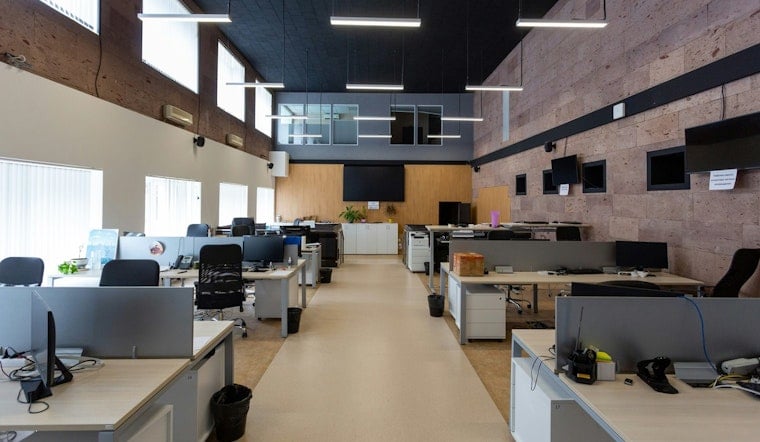
State Democrats on Tuesday rolled out a plan to pay developers to turn dead office space into much-needed housing outside New York City, betting that tax credits can breathe life into hollowed-out downtowns. The proposal would offer a refundable tax credit for rehab work and zero in on older, underused office buildings that lawmakers say have piled up since the pandemic. Backers are pitching it as a way to add housing units without bulldozing new land or trying to rezone entire neighborhoods city by city.
Under bill S.9259/A.10192, the state would create a refundable credit equal to 10% of “qualified rehabilitation expenditures” for eligible office-to-residential conversions, according to the bill text on the New York State Senate website. To qualify, projects would have to be at least 25,000 gross square feet, have been at least 50% physically vacant as of Jan. 1, 2026, and convert no less than half of the building’s gross square footage to residential use. The measure also creates a companion historic rehabilitation credit and tasks the Empire State Development Corporation and the State Historic Preservation Office with running both programs.
“New York needs to build, convert, and get creative about solutions,” Sen. Pat Fahy said as she joined Assembly Majority Leader Crystal Peoples-Stokes and Assemblymember John McDonald to introduce the bills, arguing that the incentives are aimed squarely at downtowns that have been hammered by record vacancy. The sponsors pointed to sharp increases in empty offices in Albany, Buffalo and Rochester and cited estimates that the state will need roughly 800,000 additional housing units over the next decade, according to Spectrum News.
Conversion Boom Is Already Underway
Office-to-apartment conversions are already having a moment nationwide. Analysts counted roughly 70,700 office units being turned into apartments in 2025, compared with about 23,100 such units in 2022, a surge that has made conversions a hefty share of the country’s adaptive reuse pipeline. That wave helps explain why lawmakers prefer a targeted tax credit instead of wading into local zoning rules in dozens of upstate communities. Industry trackers have flagged the shift in their 2025 market recaps, including RentCafe.
Money, Caps And Who’s Excluded
The bill would cap the credit at $5 million per qualified project and limit the program to $25 million statewide, a setup meant to stretch a relatively small pot of money by steering it toward projects that are already close to penciling out. The incentive would apply only in municipalities with populations under 1 million, which shuts New York City out of the program and sends the benefit toward smaller cities and downtown cores. New York City already has its own office-conversion incentives under the 467-m program, according to Novogradac.
What’s Next
The measures were filed in mid-February and sent to committees for initial review, where sponsors will try to line up enough support before any credits can be claimed. Legislative trackers and full bill text are available through sites such as LegiScan and the official state Legislature pages. If the package passes, it would take effect on the first Jan. 1 after enactment and would sunset after ten years, according to the bill language.
Developers and upstate officials will now watch the committee process to see whether this relatively modest tax-credit pool can push borderline projects into actual construction. Lawmakers are framing it as a quick fiscal nudge to turn empty downtowns into livable neighborhoods, but whether $25 million in credits can pull that off is still an open question.





