

























































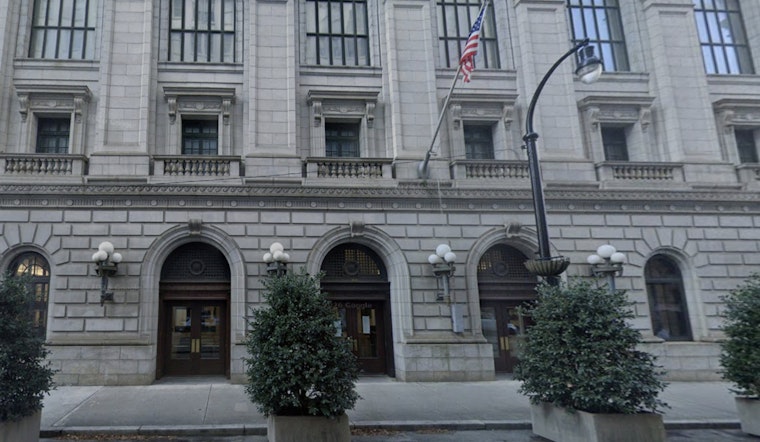
Federal appeals court action this month cleared a major legal obstacle in the decades-long ACF water wars. On Feb. 19, 2026, the 11th U.S. Circuit Court of Appeals granted Alabama’s request to dismiss its appeal challenging the U.S. Army Corps of Engineers’ water-control plans for the Apalachicola-Chattahoochee-Flint Basin. The dismissal effectively puts into motion a December 2023 mediated settlement and the Corps’ operational updates, even as other appeals remain active.
Eleventh Circuit clears Alabama from ACF appeal
The appeals court’s Feb. 19 order was detailed by E&E News. The move follows months of mediated talks and a December 2023 agreement among Alabama, Georgia, regional water providers and the Army Corps that paused litigation while the Corps completed an operational analysis and environmental review. Stakeholders say the dismissal pulls a central party out of the long-running interstate fight and clears the way for the settlement’s operational terms to take effect.
What the settlement requires
The December 2023 pact and the Corps’ subsequent water-control updates set specific "flow objectives" and Drought Zone operations for the ACF Basin, according to the Atlanta Regional Commission. ARC materials describe a 1,350 cubic feet per second rolling seven day minimum at Columbus, Ga.; a 2,000 cfs weekday target at Columbia, Ala.; and a Lake Seminole elevation near 76 feet, with Drought Zone rules that require meeting those minimums at least two days per week. The Corps adopted the plan after public input and environmental review, and ARC says the result is a clearer operational framework for downstream communities and utilities.
Why downstream communities care
Local officials and water managers have framed the dismissal as a win for cross-state cooperation and day-to-day certainty. "For the first time since 1989, there is no litigation between the states in this basin," ARC Executive Director Anna Roach told WABE, and the Metro Atlanta Chamber’s Katherine Zitsch called the step "a major milestone" in regional collaboration. The settlement lands as parts of Georgia contend with drought, with the U.S. Drought Monitor’s Feb. 19, 2026 map showing significant dryness across central and southern areas, making the new operational rules consequential for utilities, farms and fisheries downstream.
What remains in court
Alabama’s exit from this appeal does not end the legal battles. Three Florida environmental organizations have appealed a 2021 district court ruling that upheld the Corps’ ACF manual, and that appeal remains pending before the Eleventh Circuit, according to E&E News. Separately, Alabama still has ongoing legal challenges over Corps operations in the Alabama-Coosa-Tallapoosa Basin, a different front that keeps interstate water policy under judicial review, according to reporting in Law360. Those remaining appeals could shape how the Corps balances municipal supply, hydropower and environmental protections in the future.
Legal implications
The dismissal narrows the roster of litigants and gives water managers clearer operational rules to follow, but it does not shut down further court review of the Corps’ environmental analysis or its approach to fish and wildlife protections. Proponents point to the Corps’ formal review and adoption process as the legal foundation for implementing the flow objectives, while conservation groups say judicial scrutiny of that analysis will continue to be decisive.
For now, metro-Atlanta utilities and downstream towns have a more predictable playbook for drought operations, but lawyers, utilities and conservation groups will be watching the pending appeals closely as implementation proceeds. How the Corps and stakeholders translate the flow objectives into day-to-day operations over the next year will determine whether this settlement truly ends the “water wars” or simply pauses them for a new phase.





