

























































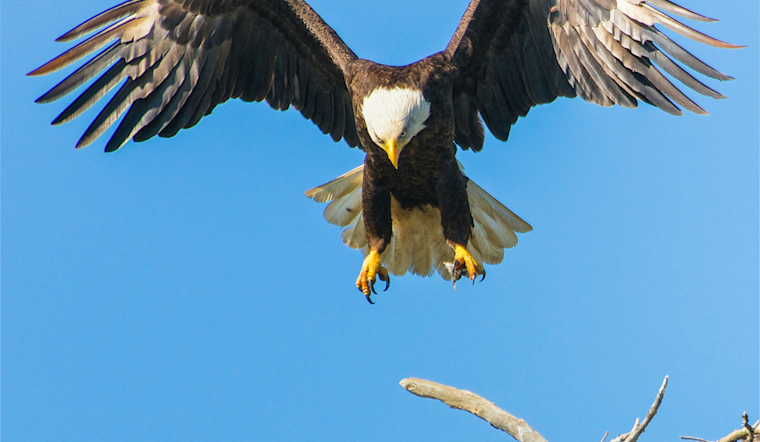
An eagle named Armstrong, caught in the grips of severe lead poisoning, has succumbed to the condition at the Wildside Rehabilitation and Education Center in Eaton Rapids, Michigan. According to CBS News Detroit, Armstrong's blood lead levels were so high that testing machines failed to quantify them, prompting staff to declare the results simply as "high." Symptoms indicated that lead had thoroughly permeated the bird's bloodstream, impeding its ability to breathe.
Despite veterinary efforts to quickly reverse his condition, Armstrong's battle ended on a somber note. Introduced to medical interventions designed to bind and expel heavy metals from his system, along with supplemental oxygen, the male bald eagle could not be saved. MLive reported that treatment began on Wednesday, but by Friday afternoon, the eagle was dead.
The prevalence of lead poisoning in avian species has been a mounting concern, and the American Eagle Foundation points out that such incidents are often the unintended side effects of predatory birds ingesting lead from fishing tackle or ammunition. One grain-sized lead fragment is potent enough to fatally poison a mature bald eagle, they say.
Wildside Rehabilitation and Education Center has urged hunters to responsibly consider the collateral damage of using lead ammunition. "Please consider using alternative ammo and sinkers. Bald Eagles are scavenger raptors, they eat the leftover gut piles from the harvested deer and if lead ammo was used, it gets left behind," they stated in a plea echoed by the American Eagle Foundation, as per CBS News Detroit. Amid this tragedy, the rehab center continues to advocate for a shift to non-lead-based options in fishing and hunting gear – a change that could potentially lower the risk of similar wildlife fatalities in the future.
The challenge in making this transition is underscored by cases like Armstrong's, which highlight the lethal consequences of indirect contamination. WILX emphasized the problematic situation, as staff at Wildside noted the grim reality of lead saturation in the bloodstream, effectively preventing crucial oxygen from reaching the bird's brain and other vital organs. Armstrong's death not only represents a single loss but also serves as a stark reminder of the dangers faced by wildlife due to human activity.





