

























































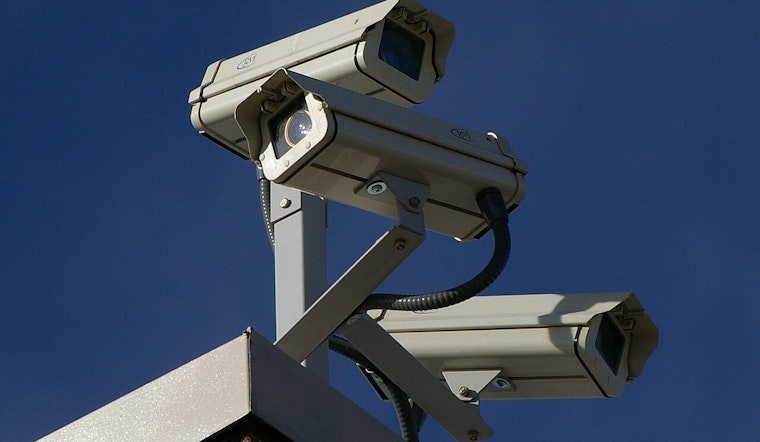
Walk around Chicago and it is hard to find a corner of the city that is not being recorded. Public spaces are watched by a sprawling mix of street cameras, automated sensors, license plate readers, and, increasingly, police drones. Privacy advocates say the result is a modern panopticon, and a sweeping new investigation shows how those systems do not just watch the city but reach into suburbs and private camera feeds, blurring the line between public safety and persistent surveillance.
As detailed by MIT Technology Review, the apparatus stitches together city cameras, private security feeds, and license plate databases so officers can pull video and audio from public schools, parks, transit, and businesses. Civil liberties groups say the scale is enormous. The ACLU of Illinois has estimated the linked camera network exceeds 30,000 devices and operates with little routine public oversight.
Gunfire Sensors And The ShotSpotter Debate
Gunshot detection technology layered yet another tool onto that network, but its usefulness has been widely contested. In 2024, Mayor Brandon Johnson declined to renew Chicago's ShotSpotter contract and moved to decommission the system, a change first reported by WBEZ. Independent reviews and oversight reports have questioned ShotSpotter's operational value and flagged how its alerts have sometimes led to intrusive police deployments.
Suburbs Send Drones Into The City
Not all surveillance is bolted to light poles. In Oak Brook, a western suburb, police have begun routinely launching autonomous drones as "first responders," and officials say the aircraft often arrive before squad cars. Reporting by ABC7 describes drones that can travel 40 to 50 miles per hour, cover the village in under two minutes, and now respond to roughly ten calls a day, a capability the chief calls a "game changer" for officer safety and evidence collection.
License Plate Readers And Local Backlash
At the same time, some suburbs have pushed back on automated plate reading networks. Oak Park's board voted to terminate an eight camera Flock Safety contract after trustees raised concerns about privacy and potential out of state data searches, the village and local reporting show. The Oak Park police pages and coverage by the Wednesday Journal note the units, installed in 2022, captured hundreds of thousands of plate images and generated thousands of alerts, figures that residents and some trustees say did not justify the privacy tradeoffs.
Who Bears The Cost
Automated enforcement, from red light and speed cameras to shared plate databases, produces real fines and real consequences for residents. ProPublica found households in majority Black and Latino ZIP codes received far more camera tickets per household than other areas, a disparity that has prompted reforms and lawsuits. Advocates also point to the money behind the systems. Some local critics estimate automated enforcement brings in roughly 150 million dollars a year and more than 2.5 billion dollars since installation, a tally reported in MIT Technology Review and cited by watchdogs.
Who Is Counting The Cameras
Researchers and watchdogs have tried to pry the systems open. Lucy Parsons Labs, a Chicago transparency nonprofit that has used FOIA requests and litigation to obtain police surveillance records, has received multi year grants from the MacArthur Foundation and the Ford Foundation to support investigations and community work. Those FOIA efforts have supplied reporters and organizers with the raw data that makes public scrutiny possible.
Legal And Policy Questions
All of this casts a long legal shadow. Communities and courts are asking whether an automated alert or a plate hit alone can justify a stop, a search, or prolonged monitoring. Suburbs such as Oak Park voted to end contracts after audits and reporting suggested outside searches of locally collected plate data, and civil liberties advocates say Chicago still lacks a comprehensive surveillance transparency law to regulate how the data are gathered, shared, and retained. That policy gap has become the core political question as the technology spreads across municipal boundaries.
For Chicago residents, the debate is no longer hypothetical. The technology is already embedded in policing and city budgets, and local reporting and watchdog work show how quickly a tool meant for investigations can become an everyday source of enforcement and data about ordinary movements. The new reporting amplifies an old point: oversight and clearer rules have lagged far behind the cameras, drones, and databases now sweeping the region.





