

























































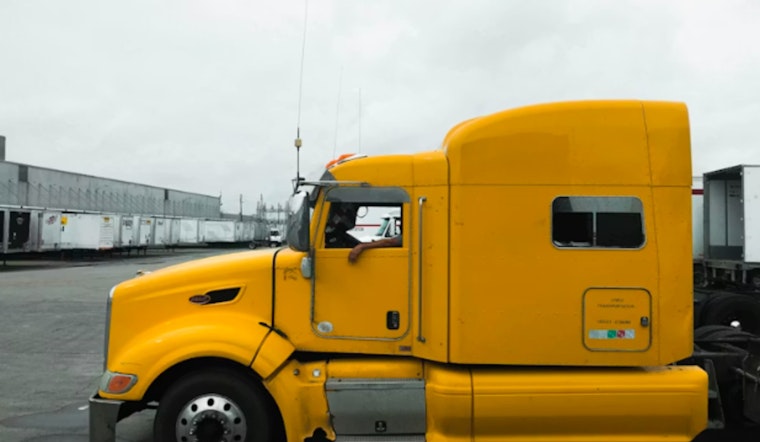
Across California, some truck-driving courses are charging students thousands of dollars while operating outside the state’s licensing system, exploiting a gap between federal training lists and state approval rolls. These programs can legally teach without undergoing the inspections and curriculum reviews meant to ensure safety and consumer protection. A data-matching project by CalMatters identified many providers listed federally but missing from the state’s approval list, and reporting includes student experiences and state enforcement records, as per Palo Alto Online.
Federal Training Rules, State Blind Spots
The Federal Motor Carrier Safety Administration requires new commercial drivers to complete a defined entry-level curriculum and to train with providers that are listed on a national Training Provider Registry. Drivers covered by the rule have to finish that program before they can even take the state commercial driver’s license skills test. These entry-level driver training rules, known as ELDT, are meant to standardize what every new driver learns, not to decide who gets to operate a school in any given state. The federal agency lays out the ELDT requirements and explains how the Training Provider Registry works on its official site at FMCSA.
The $2,500 Loophole
California law gives small private programs a break: if they charge $2,500 or less, they are exempt from oversight by the Bureau for Private Postsecondary Education. Critics say that carveout has opened the door for short, relatively low-cost commercial driving courses to bypass state licensure entirely.
Assemblymember Mike Fong tried to shut that door with AB 714, a bill that would strip commercial driving programs of that exemption. He argued the change was needed to protect highway safety as well as students’ wallets. The proposal did not make it to the finish line. It stalled in the Assembly appropriations suspense file last year. The bill text and status can be found through LegiScan, and tracking coverage from CalChamber noted the measure failed to advance before the deadline.
Enforcement: Fines, Closures and Limits
Even when a school clearly crosses the line, state enforcement can move at a crawl. Records show the BPPE has brought dozens of disciplinary actions against truck-training programs, issuing fines, orders of abatement and even revoking approvals. The paperwork tells a familiar story: investigations, notices, appeals and delays.
One recent example involved El Monte Truck Driving School, which drew a $100,000 citation and an order of abatement after investigators found it operating without a valid approval. The bureau posts its decisions and citation files online, including the El Monte findings and orders, through its published records at BPPE.
Students Left Holding the Bag
In interviews, students described paying roughly $2,000 to $6,000 for short CDL programs that later landed in regulators’ crosshairs or suddenly shut down. Some were out the full cost of tuition. Others found themselves stuck halfway through training with no clear path to finish.
Advocates say those firsthand accounts, combined with the registry analysis, show that any fix has to go beyond shuffling paperwork. They argue that lawmakers and regulators need a system that actually shields consumers before problems explode. The data, interviews and specific examples were laid out in reporting by CalMatters.
Federal Crackdown Raises Pressure
The state’s oversight gap is now being squeezed from the federal side too. In December 2025, a national review targeted thousands of training providers and warned that nearly 3,000 of them could lose the ability to issue completion certificates unless they came into compliance with federal training standards.
The review was aimed at scrubbing fraudulent or noncompliant providers from the federal registry, which would cut off their power to issue the training credentials students need before they can take CDL tests. That federal push was reported by the AP.
Legal Implications
When problems go beyond shoddy training, the fallout can shift from administrative fines to criminal charges. In 2022, the U.S. Attorney’s Office in the Eastern District of California announced prosecutions that led to convictions for dozens of defendants, including trucking-school operators and DMV employees. Investigators found that hundreds of fraudulent CDL permits and licenses had been issued.
The federal press release on those DMV corruption cases underscores how lapses in the training and licensing pipeline can quickly turn into broad public safety and criminal concerns. The case details are outlined by the U.S. Department of Justice.
For students who believe they were misled or harmed by a trucking school, the state provides complaint instructions and runs an Office of Student Assistance and Relief that can help with school closures and questions about recovering money. The bureau’s online complaint portal explains how to report unapproved operations and request help, through guidance posted by BPPE.



