

























































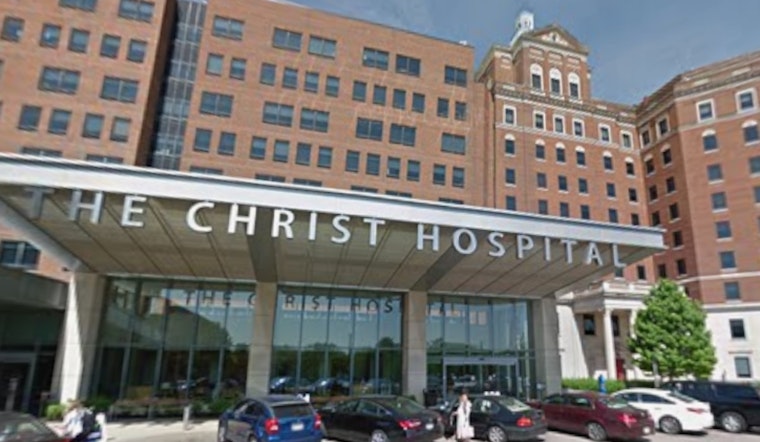
At The Christ Hospital in Cincinnati, a 70-year-old man who had already endured three open-heart surgeries had blood flow restored to a hard-to-reach part of his heart without going under the knife again. Interventional cardiologists threaded a wire into the stump of an old bypass graft, then used a stent and electrocautery to work through dense scar tissue and re-establish arterial flow. The minimally invasive procedure was led by Dr. Jarrod Frizzell of The Christ Hospital Heart & Vascular Institute. The patient, Bob Siemer, is recovering and was reportedly back to hiking not long after the intervention.
According to WLWT, Siemer first ran into serious heart trouble at age 49 and later developed endocarditis. He survived three major surgeries and a valve replacement before his most recent issue left him with limited blood flow on one side of his heart. "I was lucky to be alive after that," Siemer told WLWT, explaining that the illness cost him a leg and toes and left him battling ongoing angina and fatigue. After being told by other physicians that he had no remaining surgical options, he went to Christ Hospital for a catheter-based evaluation.
How the team restored blood flow
Frizzell advanced a wire through the old bypass graft, reopened the vessel with a stent, and, using electrocautery, cut through the scar tissue to create a new channel for blood flow, as WLWT describes. "For people that have been told there's no options, there's nothing we can do...we've got ways around that," Frizzell told the station. WLWT reports that the case was later published in the Journal of the American College of Cardiology, putting the technique in front of the peer-review community.
Christ Hospital's research infrastructure
The Christ Hospital's Lindner Research Center has a long track record of first-in-man and first-in-the-U.S. cardiovascular studies, a setup that helps its teams move novel catheter procedures from one-off successes into formal clinical investigations, according to hospital materials. The hospital lists its main campus on Auburn Avenue as the hub for that research activity, and internal documents identify Frizzell as director of Complex Coronary Therapeutics. A company press release naming him as an investigator on coronary device trials highlights the program's experience with device-focused research.
Physicians note that case reports like this one can spur wider evaluation and create possibilities for patients previously labeled "no option," although they also emphasize that longer follow-up and experience at multiple centers will be needed to know how durable such results are. Frizzell's ongoing research role is visible in clinical trial listings where he is named as a contact for studies run through the Lindner Center, a detail that could help turn single-case wins into larger, structured research efforts.



