

























































Colorado is gearing up to reopen the rulebook on its Natural Medicine program this spring, and one word is about to spark a lot of debate: ibogaine. The powerful, plant-derived psychedelic has a reputation among advocates as a potential game changer for addiction and brain injury. If state officials sign off and rewrite the rules, Colorado could become the first state in the country to license ibogaine for supervised medical use, forcing regulators to juggle strict safety standards with messy questions about where the drug would actually come from.
At meetings on August 14 and September 18, the state's Natural Medicine Advisory Board urged regulators to pursue ibogaine access and to make sure any imports line up with international biodiversity rules. The board advised the state to "write a letter of intent to start and follow the Nagoya Protocol" and to seek a federal waiver for lawful importation, according to the Natural Medicine Division. That recommendation is now headed to the executive directors who oversee Colorado's licensing agencies for further consideration.
Any move to fold ibogaine into the program will need approval from two state agencies: the Department of Revenue's Natural Medicine Division and the Department of Regulatory Agencies. According to the Department of Natural Medicine, Colorado had nine standard healing centers and 24 micro-licensed centers approved, with 18 more healing-center applications pending as of January 16.
Ibogaine might not be the last psychedelic on the table. The advisory board can recommend dimethyltryptamine (DMT) and mescaline that are not sourced from peyote, for regulated access after June 1. The broader rules review, which will include ibogaine, is scheduled to kick off this spring, according to Axios. A spokesperson told Axios that both licensing agencies have to sign off before any new medicine officially joins the program.
Sourcing And The Nagoya Protocol
Even if Colorado wants ibogaine, figuring out how to get it is a major hurdle. The advisory board has pushed regulators toward an approach that complies with the Nagoya Protocol, the international framework for fair use of genetic resources. It recommended asking the federal government for a waiver to import iboga or ibogaine extract from Gabon, where the plant is used ceremonially, according to the Natural Medicine Division. Reporting from Westword notes that the United States is not a Nagoya signatory, which could complicate any lawful importation without federal help.
Research And Safety Concerns
Early research on ibogaine is intriguing, especially in specific groups, but no one is pretending it is a gentle medicine. A Stanford Medicine study of veterans with traumatic brain injury found large improvements in PTSD, depression, and cognitive function after medically supervised ibogaine treatments, according to Stanford Medicine. At the same time, scientific reviews warn that ibogaine can prolong the QT interval and has been linked in past reports to arrhythmias and rare fatalities. That means any legal clinics would need tight cardiac screening, continuous monitoring, and detailed medical protocols before regulators let anyone near the stuff.
Where This Could Be Delivered
One likely test case is already up and running. The Center Origin in downtown Denver, the first state-licensed healing center, has begun offering supervised psilocybin sessions and is watching the ibogaine discussion closely. The Center Origin received Colorado's first healing-center license to operate in LoDo, according to Denver7, and its CEO told Axios that ibogaine can be "super effective" for addiction. The same Axios story reported the center completed just over 95 sessions last year. Local operators say any move into ibogaine would require far stricter medical rules than current psilocybin practice, given the drug's intensity and known risks.
What Comes Next
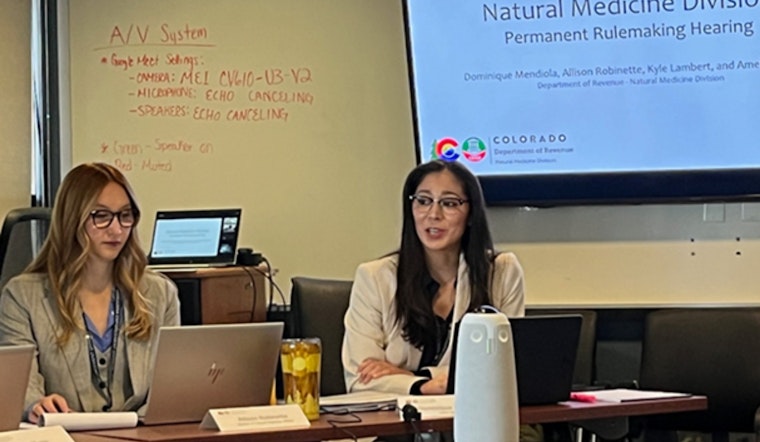
Regulators plan to move into formal rulemaking this spring, with public meetings and stakeholder sessions to hash out any proposed changes to the Natural Medicine rules. Draft rules, timelines, and meeting recordings are available through the Colorado Division of Natural Medicine, and the executive directors of both licensing agencies will ultimately decide whether the board's ibogaine recommendation becomes binding policy.
Legal Hurdles At The Federal Level
State action is only part of the story. Even if Colorado signs off, federal law still treats ibogaine and several other psychedelics as Schedule I substances, which complicates everything from sourcing and research to basic banking. Ibogaine is listed in Schedule I under 21 CFR §1308.11, and state regulators will have to navigate that status alongside the board's Nagoya Protocol push, according to Westword. For now, Colorado is trying to thread a needle between ambitious psychedelic policy and a federal system that still treats ibogaine as contraband.





