

























































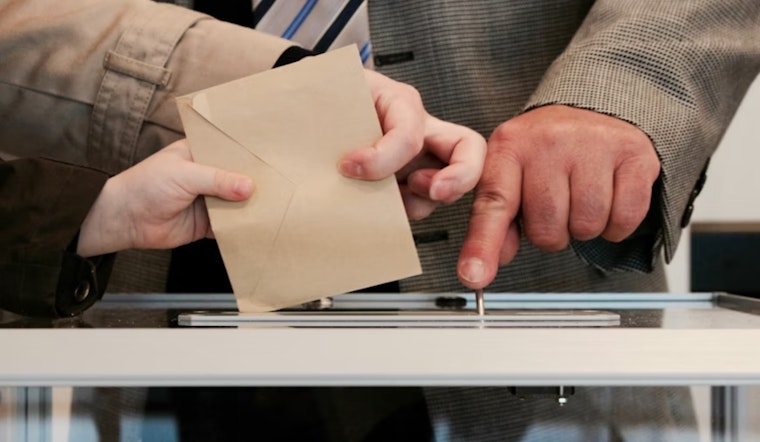
Marin County Republicans went public this week with a dramatic allegation that dead people voted in last November’s special election, a claim county election officials say does not hold up under an initial review. The party’s chair says his team found dozens of apparent cases, while the registrar counters that a quick check turned up only a few recent deaths and no sign that anyone cast a ballot after they died.
John Turnacliff, chair of the Marin County Republican Central Committee, raised the issue during public comment at a Board of Supervisors meeting and pointed to last Monday's letter asking the Elections Department to investigate the voter rolls. As reported by SFGATE, Turnacliff said his committee’s review of ballots from the Nov. 4, 2025, special election produced a list of 73 names the group believed belonged to deceased voters. Statewide, Proposition 50 received about 64.4% of the vote, according to the Associated Press.
Registrar says department followed routine checks
Marin registrar of voters Natalie Adona certified the Nov. 4, 2025, special election in early December and told the outlet she voluntarily reviewed the list provided by the county GOP. The county’s Elections Department explains its post-election and certification work on its website and says it relies on established procedures to maintain the rolls, including cross-checks with official records.
Federal law also limits how aggressively counties can update voter lists in the run-up to a federal election. The National Voter Registration Act sets out a 90-day “quiet period” that bars broad, systematic removals close to a federal contest. The Department of Justice has underscored that restriction in recent enforcement actions and guidance.
Experts: data matching and timing often explain apparent errors
Outside election experts say lists like the one assembled in Marin, typically pulled together by matching public datasets, assessor records and obituary notices, can easily generate false positives if investigators are not careful. David Becker, executive director of the Center for Election Innovation & Research, told SFGATE that “amateur sleuths” often overcount supposed dead or otherwise ineligible voters. CEIR’s public material notes its work with election officials to tighten data practices.
USC researcher Mindy Romero also told the outlet that scrutiny of election officials has intensified in recent years and can feel aggressive from the perspective of the administrators running local elections.
GOP pushes for cleaner rolls; suit over 2024 rolls was dismissed
The Marin GOP’s election-integrity committee says its mission is to clean up voter rolls and shore up confidence before the county’s June primary, and its Election Integrity page lays out its ongoing review efforts. The committee previously sued the former registrar and the state in 2024 over what it said were ineligible registrants. That case was later dismissed, according to reporting in California Globe.
Legal context
Because of the NVRA’s 90-day provision, counties have to tread carefully when it comes to large-scale voter roll changes close to federal elections. That timing sits at the heart of the Marin dispute. Election officials say they are bound to follow specific procedures that respect the quiet period, while activists argue that timely cleanups are essential to maintaining public trust. Courts and federal authorities have consistently treated that 90-day window as a firm limit on broad removals.
For now, Marin’s elections office says it took the Republican inquiry seriously and ran the checks it could under state and federal rules, and local party officials say they will double-check their own list. Both sides, at least publicly, are framing the back-and-forth as part of an effort to make sure the county’s voter rolls are accurate heading into the next round of elections.





