

























































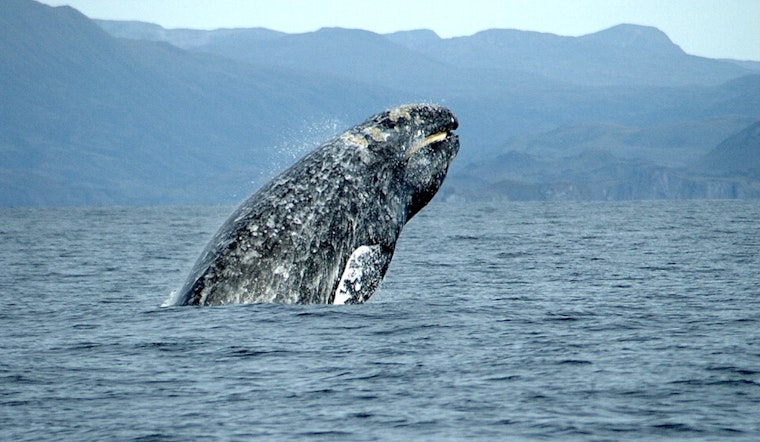
Gray whales are showing up in San Francisco Bay ahead of schedule this winter, with at least three different animals documented by the end of January and one first reported to scientists on Jan. 18. That timing is unusual because gray whales typically do not enter the Bay until mid‑February. Researchers are now zeroed in on these visits, trying to figure out whether the whales are stopping to eat, to rest, or a bit of both as their migration patterns continue to shift.
Early sightings and what researchers saw
Marine Mammal Center field researcher Bill Keener said a ferry skipper first reported a whale near the Richmond terminal on Jan. 18, and that he later photographed that animal and two others lingering in the Bay. As reported by SFGATE, the center's sighting database shows only two prior years with January records, and those involved single whales that moved through quickly instead of hanging around. Keener told SFGATE that seeing multiple whales this early "yields a lot of questions" about how long they are staying and exactly where they are feeding.
The bigger picture: population stress and feeding
The early arrivals follow an eastern North Pacific unusual mortality event that drove gray whale strandings sharply higher from 2019 through 2023 and pushed researchers to reassess the animals' health and behavior. According to NOAA Fisheries, calf production reached a very low estimate in 2025, roughly 85 calves, and investigators have pointed to changes in Arctic feeding grounds as a likely driver of malnutrition and the population decline. Those long‑term shifts make any change in migration timing or how the Bay is used by whales especially notable to scientists and managers.
Local protection efforts ramp up
The Marine Mammal Center has rolled out "Whale Smart," a vessel‑operator training pilot for ferry and commercial crews designed to cut collision risks and improve real‑time reporting, the center announced in a Feb. 6 press release. The program was developed after an unprecedented year of strandings and sightings and teaches mariners how to spot whales, slow down, and report them, according to The Marine Mammal Center. Keener said crews are already talking more on the water; on one recent survey, a ferry radioed in a sighting and changed course to avoid a whale, as reported by SFGATE.
How the public and mariners can help
Researchers are urging anyone who spots a whale to log the sighting so scientists can better map movements and shape vessel traffic decisions. Reports can be submitted through the free Whale Alert mapping tools and apps, which feed sightings into management systems and support temporary speed recommendations, according to Whale Alert. Observers are asked to give whales plenty of space, slow down, and share locations instead of trying to approach, a cautious approach that can help prevent deadly vessel strikes as the season plays out.
For now, the early gray whale arrivals are a pointed reminder that the Bay's role in their migration may be changing, and that ferries, cargo ships, and recreational boats are all pieces of the conservation puzzle. Scientists plan to keep tracking these animals closely to see whether the January visitors were a one‑off surprise or the start of a new pattern.



