

























































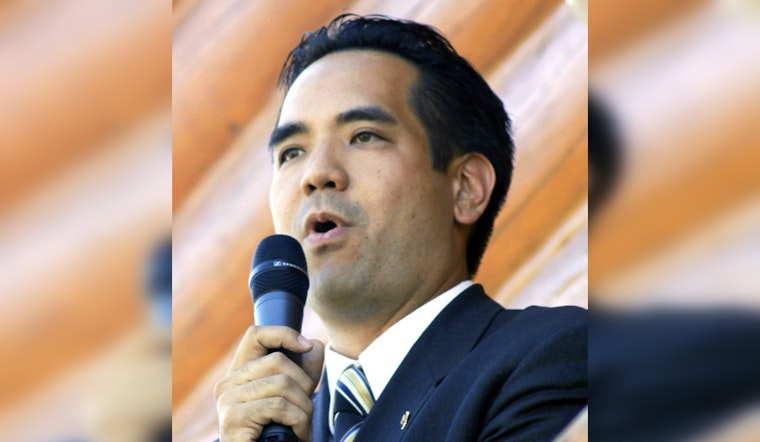
Newly released Justice Department records tied to the Jeffrey Epstein files are pulling former Utah Attorney General Sean D. Reyes into the spotlight, showing his office listed on court paperwork in a long-running defamation fight involving University of Utah law professor Paul G. Cassell and Alan Dershowitz. Deposition transcripts and counsel lists place the Utah Attorney General’s Office at the center of portions of that litigation.
What The Files Show
The videotaped deposition transcript for Paul Cassell, included in the Epstein document set, lists an attorney from the Utah Attorney General’s Office among counsel present in Fort Lauderdale. Cassell’s testimony also refers to a written agreement that he said included the Utah AG’s office.
According to Epstein.media, Cassell identified participants from the Utah Attorney General’s Office during the October 2015 proceedings and described a written agreement naming those parties.
In a separate counsel roster contained in the oversight materials, the plaintiffs’ side is explicitly listed as including “SEAN D. REYES — Utah Attorney General,” indicating formal involvement by the office in the Edwards/Cassell matter, based on a public record that appears in the same oversight batch. The roster is posted by EpsteinExposed.
Reyes’ Response
Local coverage that reviewed the same files reports that Reyes acknowledged traveling to Fort Lauderdale in connection with the litigation and emphasized that his focus was on survivor protections. As reported by ABC4, Reyes told reporters he viewed protecting survivors as a high priority and described trafficking as a modern form of slavery that devastates families.
A records request under Utah’s GRAMA process turned up no responsive documents reflecting a formal written agreement. However, correspondence posted on MuckRock includes the deposition transcript language in which Cassell described a written agreement and named the Utah Attorney General’s Office, and, as he recalled, the attorney general among the parties.
Legal Backstory
Cassell has for years represented Epstein survivors and, alongside one victim, challenged the government’s handling of the 2008 non-prosecution arrangements, asking courts to let victims contest that deal. The Eleventh Circuit ultimately heard those claims en banc and ruled against the petitioners, as detailed in the court’s opinion hosted by Justia.
Separate from that, the broader tangle of civil litigation included a defamation suit and countersuit between Cassell (and co-plaintiffs) and Alan Dershowitz. Public filings show the parties later resolved those claims, with settlement paperwork and public notices documenting the end of the dispute. A joint statement and related materials archived at PR Newswire record that the parties agreed to withdraw certain public allegations as part of that process.
Why The New Disclosures Matter
The Cassell deposition and associated records are just a small slice of a much larger set of Epstein-related material the Department of Justice has been releasing under transparency orders. That release has turned into its own controversy, as victims and their lawyers flagged what they described as serious redaction failures in the posted files.
In response to those complaints, the DOJ removed thousands of documents from public view for additional redactions, according to reporting by Newsweek. The back-and-forth has raised fresh questions about how the government balances public disclosure with survivor privacy when it comes to high-profile abuse cases.
Resources
For Utah residents, help is not limited to the headlines. If you or someone you know has been affected by sexual violence, the state’s 24-hour sexual violence crisis line is listed locally as 1-888-421-1100. That hotline information appears in local coverage tied to the Epstein files, including reporting by ABC4, which also outlines additional support options for survivors.





_(cropped).jpg)