

























































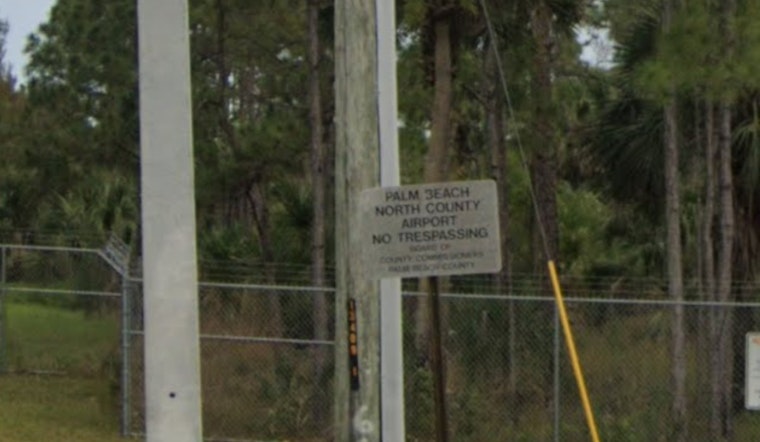
Flight safety was pushed into the spotlight this week after a Cessna Citation jet collided with several deer during its takeoff from North Palm Beach County General Aviation Airport. The incident, which took place around 7:55 p.m. on Tuesday, was confirmed by the Federal Aviation Administration (FAA). Despite the mid-takeoff collision, the aircraft was able to make a secure landing at Palm Beach International Airport, as reported by CBS12.
The specifics of the deer's condition and the exact number of animals hit remain unclear. However, the FAA is currently conducting an investigation into the peculiar occurrence. Wildlife strikes, while not an everyday event, have been meticulously recorded by the FAA since 1990. Instances like these where terrestrial mammals like deer and coyotes collide with aircraft are rare but notable when they do occur.
In a detailed report provided by WPBF 25 News, Michael Leighton, a seasoned pilot, expressed his thoughts on the rarity of such collisions. "It is an extremely, extremely rare event, like getting hit by lightning or getting bit by a shark. It's not something that happens. You could fly your whole life, your entire life. I've got 16,000 flight hours, that's two full years off the surface of the Earth, and I've never hit an animal with an airplane. Can it happen? Sure. Is it likely to happen? Probably not," Leighton told WPBF 25 News.
The FAA maintains a comprehensive database tracking wildlife encounters with aircraft, revealing from 1990 through 2024, 656 species of birds, 57 species of terrestrial mammals, 52 species of bats, and 45 species of reptiles have been recorded as victims of strikes. In their findings, terrestrial mammals, chiefly white-tailed deer, were accountable for about 40 percent of the incidents resulting in aircrafts being destroyed or damaged beyond repair.
Leighton further explained the protocol when wildlife is present on runways, emphasizing the safety of the pilot and aircraft over the animal. "Clearly, you don't want to do anything that's going to cause you to crash. Sometimes it's better to hit the animal and not be in the air when you do it, than to try and lift the plane off early, for example, to miss it, and then create a flight hazard to yourself because the plane wasn't ready to fly," he said in a statement obtained by WPBF 25 News. He also elucidated that at certain speeds, avoiding an animal on the runway becomes near impossible for an airplane due to its limited ground maneuverability.
While the FAA's data indicate a decline in the number of damaging strikes over the years, this incident serves as a jarring reminder of the unexpected challenges that can arise in aviation, and the rigorous training and protocols aviators adhere to in the face of such challenges.





