

























































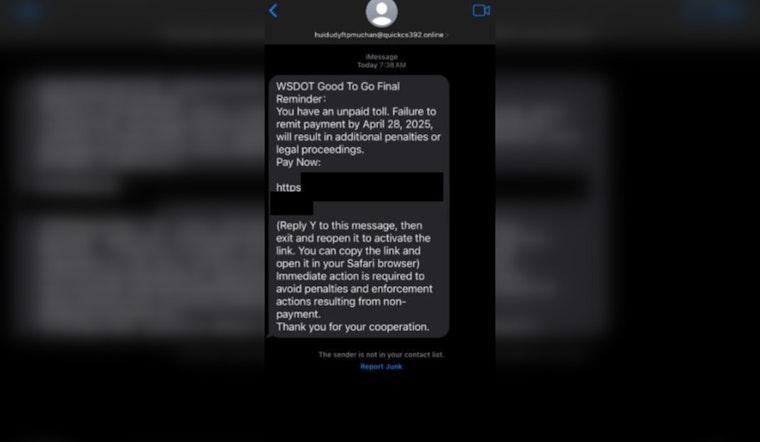
State troopers and traffic officials put Seattle-area drivers on alert Friday, warning about a wave of scam text messages pretending to be from the Washington State Department of Transportation's tolling program. The texts claim recipients owe "outstanding" tolls and tell them to click a link or risk arrest. Officials say several people were alarmed enough to call 911, pulling the scam straight into the emergency dispatch system.
State patrol flags messages as a scam
The Washington State Patrol's public information office told traffic partners it had received "several 911 calls" from people who got the texts. The messages falsely claimed to be from WSDOT, warned of unpaid toll fees and even threatened possible arrest. That warning was then shared by WSDOT Traffic on X, which retweeted the patrol's notice to its followers.
How the smishing scheme works
Scammers are using "smishing," or phishing by SMS, to impersonate toll agencies. They send urgent-sounding texts that link to fake payment pages designed to grab money or personal information. Federal consumer authorities, including the Federal Trade Commission, say the tactic has spread nationwide and often leans on small-dollar amounts and intimidating language to push people into quick decisions. National reporting has urged drivers not to tap unexpected payment links and to verify any notice through an agency's official website instead of the message itself. The Washington Post
How to protect yourself
WSDOT's Good To Go! program says it does not send unsolicited texts that ask for payment. Legitimate toll notices show up in your MyGoodToGo account or arrive by mail. If a sketchy text pops up, do not click the link, block the sender, and forward the message to 7726 (SPAM). WSDOT's advisory also urges drivers to report fraud through the FBI's Internet Crime Complaint Center and to contact their bank right away if they have already paid. WSDOT's advisory
If you clicked a link
If you clicked a suspicious link or paid a bogus toll bill, contact your bank or card issuer immediately to report fraud and ask whether charges can be reversed. File reports with the FBI's IC3 and the FTC so investigators can track the scam, and consider placing a fraud alert with the major credit bureaus. You can also submit a report to the BBB to help warn other drivers.
State and local officials stress that these texts are fraudulent and that toll bills should always be confirmed through official channels. If a message demands immediate payment, delete it and check your MyGoodToGo account or your mail directly instead.





