

























































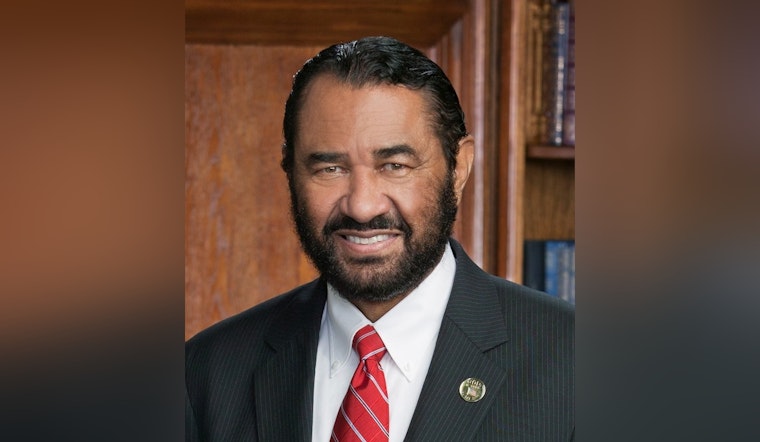
Houston Rep. Al Green was escorted out of the House chamber during President Trump’s State of the Union on Tuesday after he rose from his seat and hoisted a handwritten sign that read, "Black people aren't apes." The protest unfolded just as the president entered and the cameras were rolling, prompting audible gasps and shouts from lawmakers in both parties. Green refused to put the sign down when asked and was led from the room by the sergeant-at-arms, briefly disrupting the opening minutes of the nationally televised address and injecting a stark racial confrontation into an already tense night at the Capitol.
What happened in the chamber
Video from NBC Chicago shows Green standing near the front of the Democratic section, raising the sign high and exchanging a few words with Rep. Troy Nehls before chamber staff and security moved in and walked him out. The scene appeared on the official House feed and was instantly clipped and shared across social media. As the speech continued, lawmakers from both sides reacted from the floor, and the confrontation quickly became one of the most replayed moments in the immediate post-speech coverage.
Why the sign drew notice
The wording echoed outrage over a Truth Social video President Trump shared earlier this month that briefly portrayed Barack and Michelle Obama as apes; the clip drew bipartisan condemnation and was later removed, according to The Guardian. The White House first brushed off the video as an online meme, then said it had been posted accidentally by a staffer. The episode has continued to hover over Washington as a reminder of how social media posts can stoke racial tensions.
Green's record of chamber protests
Green, who represents parts of Houston, is no stranger to high-profile protests on the House floor. He was removed from a joint session last year and later censured, and he has previously filed articles of impeachment against the president, the Houston Chronicle reports. That track record factored into leadership discussions this week over whether such dramatic gestures help or undercut broader Democratic messaging.
Political fallout
The confrontation punctuated a State of the Union already clouded by internal Democratic debates over whether members should attend the speech at all and by plans for a separate "People's State of the Union" event on the National Mall, per Hoodline's coverage of the counterprogramming. For many lawmakers and viewers, Green’s sign turned an ongoing argument over race, rhetoric, and online behavior into a vivid floor fight that was certain to headline the day’s political conversation.
Once Green was removed, the chamber settled enough for the president to continue, but footage of the sign and his exit spread rapidly online and is expected to be parsed by both supporters and critics in the hours ahead. The incident is poised to feed not only the immediate partisan back-and-forth, but also wider debates about race, protest, and presidential language as the midterm campaign season accelerates.





.jpg)