

























































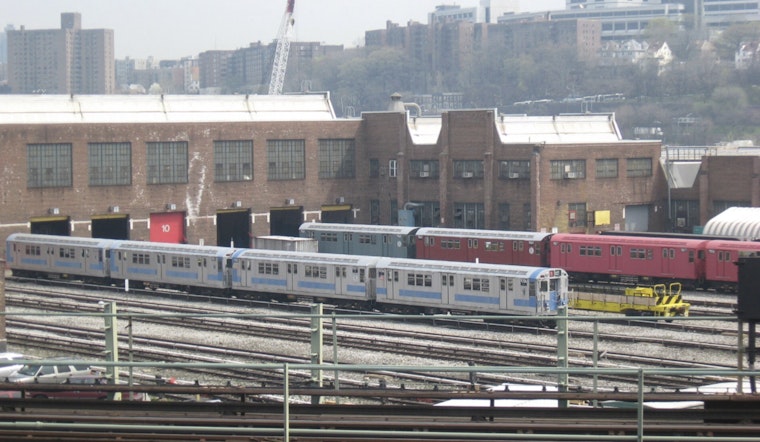
A Long Island Rail Road repair shift in Queens allegedly ended with a sewage shower and a federal lawsuit.
Christopher Casey, an LIRR repairman, says he was doused in human waste while working under a train at the railroad’s Hillside Maintenance Facility in Queens and has now taken the railroad to federal court, alleging severe, disabling injuries. According to his complaint, a maintenance cut-out on the train’s black-water tank, the holding tank for onboard toilet waste, suddenly discharged while he was replacing a cable and soaked his head and face. Casey is seeking unspecified damages and accuses the railroad of failing to follow its own safety procedures.
As reported by the New York Post, Casey filed his complaint in Manhattan federal court, saying the incident happened during an August shift at the Hillside facility, where he had been assigned to work on the underside of a railcar. The lawsuit claims the black-water tank should have been emptied before the repair began and that the LIRR failed to follow existing protocols designed to reduce workers’ exposure to raw sewage.
What the lawsuit says
In court papers, Casey says a waste-pipe cut-out “opened and expelled the contents” of the black-water tank directly onto his head, leaving him with what he calls severe and disabling injuries. The filings argue the train’s waste pipe was neither emptied nor secured before the job and that supervisors failed to carry out cleanup or safety measures that could have lowered the health risks. These allegations are laid out in the federal complaint, according to the New York Post.
Health and safety concerns
Public health and workplace safety officials warn that contact with untreated sewage can expose workers to enteric pathogens and other hazards, which is why employers are expected to provide training, hygiene facilities, and proper protective gear. According to NIOSH, workers who handle biosolids or raw sewage should be equipped with gloves, splash-proof face shields, liquid-repellent coveralls, and easy access to hand-washing stations, and should be trained on hygiene practices and the correct use of personal protective equipment.
OSHA also notes that gases such as hydrogen sulfide can be released from sewage and can create additional acute dangers in the workplace. The agency has clarified that its Bloodborne Pathogens standard generally does not apply to diluted raw sewage unless it is visibly contaminated with blood, although other chemical and infectious risks still trigger employer responsibilities to protect workers, according to OSHA.
Legal angle
Casey’s filing in federal court starts a civil personal-injury claim that could, if successful, result in compensation for medical expenses, lost wages, and pain and suffering, which are the typical forms of relief sought in such cases. Negligence is the core legal theory in most personal-injury suits, where a plaintiff argues that a defendant failed to exercise reasonable care toward a worker or customer, according to the Legal Information Institute.
What happens next
The complaint has been filed in Manhattan federal court and, if the case proceeds, it will be docketed in the U.S. District Court for the Southern District of New York. Members of the public and the press can monitor filings and schedules through the district’s clerk’s office at the Thurgood Marshall and Daniel Patrick Moynihan courthouses, where the court will set standard deadlines for serving the complaint, filing responses, and holding any initial scheduling conferences, according to the SDNY.



