

























































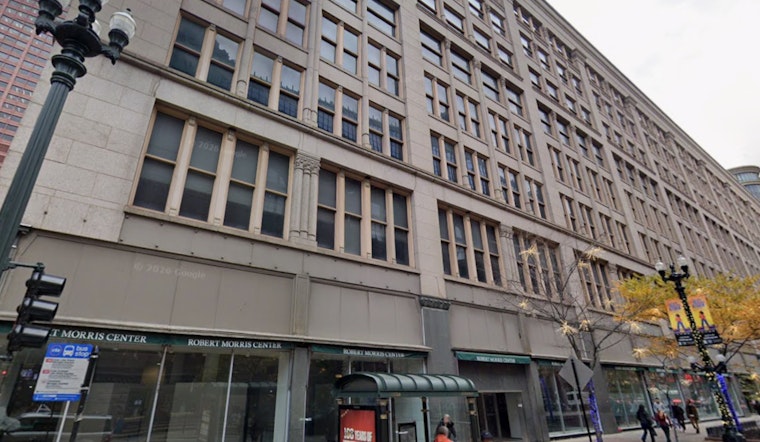
A long-empty Loop landmark is on track to swap copy machines for leafy greens. Farm Zero and investor Marc Calabria plan to convert the mostly vacant building at 401 S. State St. into a mixed-use urban farming and research complex, combining stacked indoor growing racks with clinical and nutrition research, a startup incubator, a produce market and rooftop greenhouses. Backers pitch the project as a way to grow fresh food directly inside downtown while turning a big, idle office property back into productive use.
Landmark Sale Sets Stage For Reinvention
Calabria acquired the roughly 485,000-square-foot, eight-story building out of distress last year for about $4.2 million, a steep drop from the $68.1 million it sold for in 2016 after earlier ownership changes. The structure, designed by William Le Baron Jenney, carries both national and Chicago landmark status and has sat largely empty since its last tenant exited in 2020. Those sale details and the building’s history were reported by The Real Deal.
Part Farm, Part Research Lab, Part Marketplace
Under the Farm Zero and Calabria plan, most of 401 S. State would be outfitted with vertical farming racks alongside a health research center and an incubator for controlled-environment agriculture startups. At street level, the vision calls for a produce market and restaurants that put the greens to work on the plate, not just in spreadsheets. Backers also see the roof pulling double duty with solar panels, greenhouses and outdoor dining to show off the concept. As reported by CoStar, Farm Zero CEO Russell Steinberg described the project as an effort to build “an important brain trust” that links food production to health research.
From Test Plots In The Sky To Bigger Downtown Footprints
Farm Zero previously ran a proof-of-concept farm on the 18th floor of 30 N. LaSalle that turned out romaine, arugula, basil, broccoli and other greens while the team tested crop cycles and logistics. WBEZ chronicled the LaSalle demo and the company’s early operations, and The Real Deal reported that Farm Zero secured a longer-term footprint at 125 S. Wacker Drive to ramp up production. Those experiments helped the team make its case that downtown office towers can host commercially viable indoor farms, not just law firms and consultants.
Health Partners, Policy Angles And The Food Supply Gap
Project consultants say the new center could support research that ties “food is medicine” concepts to the prevention and treatment of chronic illness, with the Institute for Food Safety and Health expected to take part. Deloitte supplied pro bono analysis that helped Farm Zero shape a financial model for early fundraising, and consultants point to data indicating that only about 4% of the food consumed in Illinois is grown in-state, a statistic backers use to argue for more local production. Those partnerships, the financing work and the 4% figure were detailed by CoStar.
What Comes Next For 401 S. State
Supporters say they plan to pursue a mix of public funding, private investment and partnerships with health systems and research institutions while they lock in a development budget and timeline. If the project moves ahead as envisioned, it could stand out as a high-profile adaptive reuse story in downtown Chicago and a working lab for urban food systems and local food access. Farm Zero’s website outlines the group’s mission to cut food miles and run Food Is Medicine programs, framing 401 S. State as a logical next step in scaling modular urban farms inside the city limits.



