

























































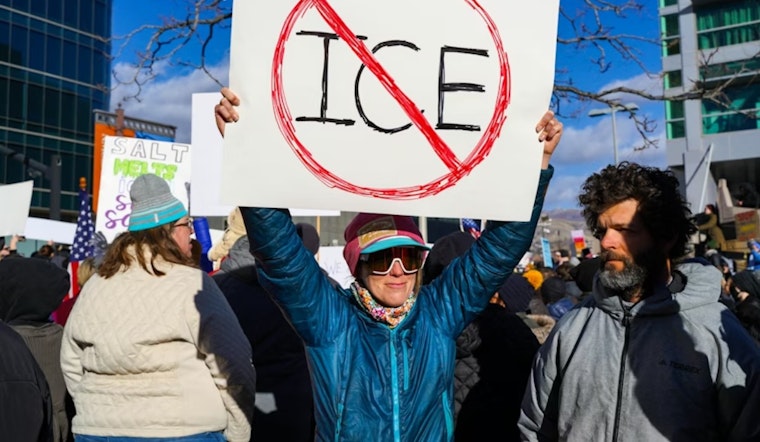
Valentine’s Day in the East Bay was heavy on protest and light on chocolates, as hundreds of residents gathered at Lake Merritt in Oakland and marched through Concord to call out U.S. Immigration and Customs Enforcement. Organizers cast the twin actions as both a rejection of federal enforcement tactics and a promise to step up local support, from legal accompaniment to food aid, for immigrant neighbors. The demonstrations unfolded against a backdrop of fights over Department of Homeland Security funding, court consolidations, and expanding surveillance tools that activists say heighten risks for communities of color.
Protests in Oakland and Concord drew hundreds, with Concord organizers estimating at least 200 people turned out for a pair of rallies and a march, according to NBC Bay Area. In Oakland, participants pushed city leaders to end the city’s relationship with Flock and dismantle an automated license plate reader network that demonstrators say can be tapped by federal agencies.
Oakland Protesters Zero In On Flock Surveillance
At Lake Merritt, demonstrators singled out Oakland’s network of license plate readers, arguing that expanded surveillance access leaves immigrant neighborhoods more exposed to federal enforcement. The San Francisco Chronicle reports that the City Council approved a new two-year contract worth roughly $2 million with Flock Safety late last year, a move that reignited privacy concerns over possible data sharing with federal agencies. The San Francisco Chronicle has detailed both the council debate and the continuing community pushback.
Concord Organizers Gear Up To Shield Neighbors
In Concord, organizers framed the event as equal parts protest and dry run for an expanded safety net. Volunteers are lining up to drive people to immigration court, deliver food to residents who are afraid to leave home and help local businesses draft response plans in case of enforcement operations. The rally listing set the meeting point at the former Big Lots parking lot at 2160 Monument Blvd, with a march route to Meadow Homes Park, according to the event page from Indivisible ReSisters Contra Costa.
San Francisco Court Closure Fuels Access Fears
Adding urgency is the planned closure of the main San Francisco immigration courthouse at 100 Montgomery Street and the consolidation of operations in Concord, a shift that legal advocates warn will tangle already backlogged dockets. KQED reports that lawyers and former immigration judges say the move could strip people in court of nearby legal resources and force longer travel and wait times for hearings.
Political Backdrop: Funding Fight And Oversight Push
The East Bay demonstrations are unfolding as Congress wrestles over how to fund the Department of Homeland Security and whether to attach tougher oversight rules. Lawmakers are weighing conditions that could include unmasking agents, requiring body cameras and tightening warrant standards as part of DHS appropriations. Congressman Mark DeSaulnier told NBC Bay Area he backs efforts in the Senate to hold up DHS funding until stronger accountability measures are written into law, and organizers at the rallies argued that such reforms are urgent because enforcement continues even while funding talks drag on.
What’s Next
Organizers say this was not a one-day show of force. They plan follow-up visibility actions and regular weekend gatherings while coordinating rapid-response support for neighbors who encounter federal agents. Local calendars and logistics for those efforts are being shared by groups including Indivisible ReSisters Contra Costa, which also urged participants to bring nonperishable food for a drive tied to the Concord event.
Legal Implications
The combination of a closing courthouse, a limited roster of immigration judges and a high-stakes appropriations fight could mean longer waits and more travel for people with immigration hearings, a scenario advocates say will make it harder for immigrants to find lawyers or get to mandatory check-ins. Both local reporting and national coverage of the DHS funding standoff underscore why community organizers now treat transportation help, legal accompaniment and outreach as core parts of the protest playbook. See coverage from KQED and national reporting on DHS negotiations for additional context.




