

























































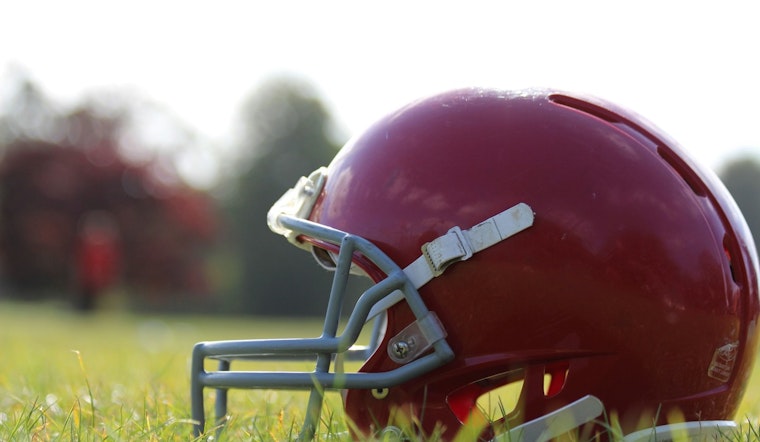
New safety research and a fresh national standard are about to shake up youth football gear across San Antonio. Studies have flagged that younger players are more likely to slam their heads into the turf, and the National Operating Committee on Standards for Athletic Equipment is responding with a youth helmet weight cap aimed at cutting that risk. That means local programs still using heavier helmets now have a choice: start phasing in lighter sets or wait until new certified models hit the shelves.
Helmet sensors run by Virginia Tech's Helmet Lab recorded that younger players hit their heads on the ground more often during tackles because their necks are weaker and their heads are proportionally larger. Those patterns pushed researchers to treat helmet mass as just as important to youth protection as padding and fit. Around San Antonio, helmet sets for middle-school and youth programs commonly weigh between four and six pounds, and parents and equipment managers are already worrying aloud about what it will cost to upgrade, according to News 4 San Antonio.
National Standard Sets A 3.5-Pound Cap
The standards body NOCSAE has finalized ND006, the first youth-specific football helmet performance standard, and it sets a mass limit of 3.5 pounds for helmets tested on small headforms. ND006 also tightens acceptable rotational acceleration in lab tests and relies on a lighter pneumatic impactor tuned to the kinds of hits youth players actually take. To give manufacturers time to redesign and certify models, NOCSAE set an effective date of September 1, 2027, while allowing companies to seek certification earlier if they are ready, according to NOCSAE.
What The Research Actually Showed
NOCSAE-funded studies led by Virginia Tech and the University of Ottawa combined helmet sensors, video review and predictive modeling, and they found that the youngest players sometimes register higher head accelerations because ground impacts are so common. That discovery, that hitting the ground rather than only colliding with other players drives a lot of the exposure, directly shaped the weight and rotational limits in the new youth standard. The academic reporting around those studies and the standards rollout gives parents and programs a clearer reason to move away from simply chasing the heaviest or most heavily padded helmets, as reported by Leaders in Sport.
Local Reaction: Safety Vs. Price
Equipment managers and parents in San Antonio say they are in favor of anything that better protects kids, but the price tag has plenty of them bracing. Youth helmets generally run roughly $150 to $400, and many youth-league families are already covering the full cost of gear on their own. Southwest ISD's athletic director told reporters the district expects the transition to be manageable because schools already replace helmets on a multi-year cycle and can sync new purchases with the rule change, details reported by News 4 San Antonio.
How Families And Teams Can Prepare
Families can start by asking coaches or athletic directors whether the district plans to require ND006-certified models and if booster clubs or district budgets might help cover replacement costs. NOCSAE notes that manufacturers can seek certification before the September 1, 2027 effective date and that the Safety Equipment Institute will list certified youth helmets, so parents can keep an eye out for SEI-certified options. For model-by-model performance, Virginia Tech Helmet Lab ratings provide independent comparisons of how well different helmets reduce concussion risk, and proper fit plus a check with a trained equipment manager remain essential protections, per Virginia Tech Helmet Lab.





