

























































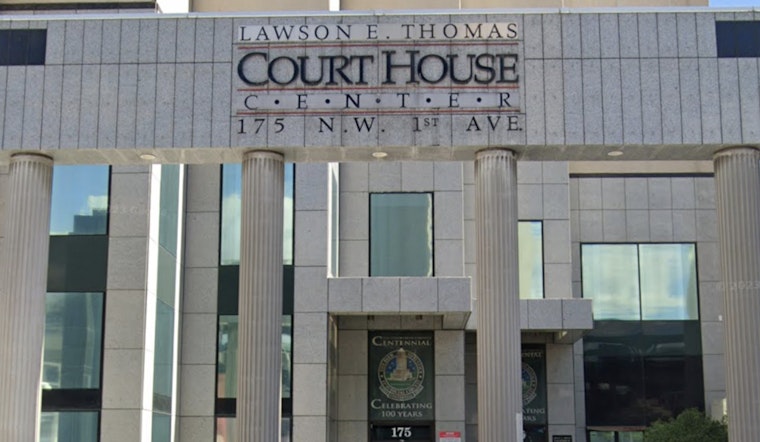
A North Miami attorney is asking a Miami-Dade judge to slap the city’s lawyers and the city attorney’s office with sanctions, alleging they leaned on artificial intelligence that spit out case law that does not actually exist. The claim surfaces in a public-records lawsuit tied to an alleged unlawful arrest and argues the city’s filings cited authority that either is not real or was distorted. If the court finds that fabricated citations were submitted, the motion says that could count as sanctionable misconduct under local court rules.
What the lawyer filed
As reported by Miami New Times, attorney Pierre Faudlin, who represents plaintiff Jean Jouse Charlot, filed a motion for sanctions on February 2, 2026, after suing the City of North Miami for allegedly failing to turn over public records. According to Faudlin’s filing, he first requested arrest affidavits, search warrants, body-worn camera footage, and investigative files in August 2025. When the city did not produce everything he says he asked for, he followed up with a formal public-records complaint in November.
Miami-Dade's AI disclosure order
On January 15, 2026, the Eleventh Judicial Circuit issued Administrative Order No. 26-04, which requires attorneys and self-represented litigants to disclose any use of generative AI on the face of their court filings and to certify that all citations and factual assertions have been independently verified. The move is aimed squarely at stopping so-called “hallucinated” legal authority from slipping into the record. The order also flatly forbids the submission of fictitious legal authority and spells out potential sanctions that range from striking filings to referral to The Florida Bar for discipline. The full text of Administrative Order No. 26-04 is available from the Eleventh Judicial Circuit.
The alleged fake citation
Faudlin’s motion says the city cited a nonexistent Third District Court of Appeal decision, “Kline v. Miami-Dade County,” to bolster its arguments. The only reported Florida opinion at 200 So. 3d 271 is Kline v. University of Miami, a First District case that he contends does not back up the city’s position. “That case does not exist,” Faudlin told Miami New Times, adding that he believes the city also twisted the meaning of other precedents.
Why this matters beyond North Miami
Court systems across Florida are tightening rules on AI disclosure and verification after several filings around the state were flagged for AI-generated mistakes. The Florida Bar notes that both the Eleventh and Seventeenth judicial circuits recently rolled out administrative orders that require lawyers to be explicit about when they use AI tools and to certify that their work has been checked the old-fashioned way. Judges and court administrators say the new rules are meant to protect the duty of candor and keep legal research transparent and auditable.
Sanctions and legal risk
If the judge decides that fabricated legal authority really did make it into the city’s filing, the Eleventh Circuit’s order lays out a menu of possible penalties, including striking the offending filings, imposing monetary sanctions, initiating contempt proceedings, and referring the matter for disciplinary action. Around the country, courts have already scolded and, in some instances, sanctioned lawyers whose filings contained AI-generated fake citations, a trend judges have publicly blasted for eroding the trustworthiness of what lands on their desks. Ars Technica
What comes next
Faudlin is asking the court to impose sanctions on the City of North Miami, the city attorney’s office, and the assistant city attorney named in the motion. The judge has not yet ruled on that request. Whatever happens at the hearing, and in any follow-up orders, is likely to send a clear message to municipal lawyers and other local counsel about how carefully they must handle AI tools in future court filings.





