

























































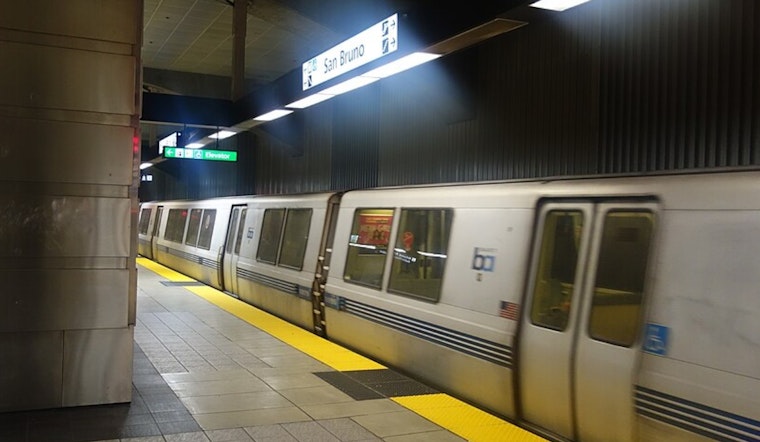
Overnight construction is about to get a lot more noticeable between Millbrae and San Bruno, as BART crews begin a months-long modernization push that will keep workers on the tracks from late evening into the early morning hours.
The City of San Bruno says the work will install a new communications-based train control system designed to improve reliability and eventually allow more trains to move through the Transbay Tube. Residents and riders along the corridor can expect nighttime activity and intermittent noise between roughly 9 PM and 4 AM in the coming months.
When And Where The Work Will Happen
According to the City of San Bruno, the construction window runs from February through June 2026, with most activity planned overnight from 9 PM to 4 AM.
🚆 BART Modernization Work Coming Soon
— City of San Bruno (@CityofSanBruno) February 21, 2026
Hey San Bruno! BART is installing a new communication-based train control system to improve reliability and expand future service. Once complete, this upgrade will allow BART to increase service through the Transbay Tube from 24 to 30… pic.twitter.com/0xCasjx2bm
Crews will first mobilize near Center Street in Millbrae, then move north along San Antonio Avenue toward Cupid Row in San Bruno. The city notes that construction could involve pile driving, vacuum trucks, generators, work lights and vehicles with backup alarms, so the corridor will not be especially quiet while crews are active.
What BART Is Installing And Why It Matters
BART is replacing its decades-old fixed-block signal system with Communications-Based Train Control, or CBTC, which allows trains to safely run closer together and reduces headways. BART's Transbay Corridor Core Capacity Program identifies the CBTC upgrade as a critical step toward increasing Transbay Tube capacity from a maximum of 24 trains per hour to a target of 30 trains per hour.
The goal is more frequent peak-hour service and improved reliability along the entire corridor, once equipment is installed, tested and fully certified.
Who Is Building The New Signaling And The Larger Program
Hitachi Rail holds the contract to design and install the CBTC equipment that will be deployed on BART tracks, according to the company. Hitachi describes the work as one of the largest signaling upgrades in the United States and says the system will be rolled out in stages, beginning with testing on BART's Hayward test track before any broader implementation on the mainline.
What Residents And Riders Should Expect
The City of San Bruno reports that affected homes and businesses will receive mailed courtesy notices outlining schedules, contact information and what to expect as the project moves along the corridor.
Overnight work could bring short-term road impacts and noise, so the city advises residents to secure outdoor items and be ready for potential sleep disruptions while the heaviest work is underway. Riders are encouraged to monitor service alerts and budget extra time for trips during the construction period, in case late-night activity affects operations.
How This Fits Into BART's Long-Term Plan
BART's Transbay Corridor Core Capacity Program pairs the CBTC installation with several other big-ticket improvements meant to support more trains during the busiest hours. These include 306 additional railcars, new traction power substations and an expanded railcar storage yard at the Hayward Maintenance Complex to handle the increased fleet size. BART says pieces of the program will roll out over several years, as equipment is tested, phased in and certified.
For now, that long-term vision translates to a lot of overnight activity along the Millbrae to San Bruno stretch. Noise, lights and traffic changes are part of the deal when crews open up a system that has been in place for decades, but planners and engineers are betting that the short-term pain will eventually pay off with smoother, more frequent BART service.
Officials with the city and the transit agency say they will share more detailed schedules and contacts as work advances toward June. In the meantime, residents are urged to check the mailed notices or reach out to the city's public works office with immediate questions.





