

























































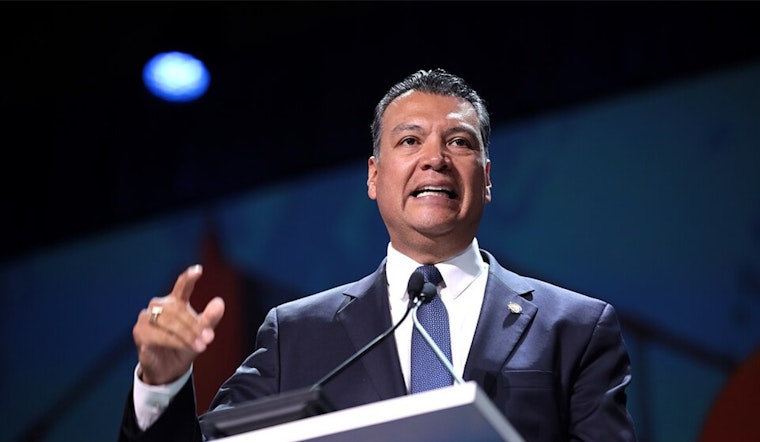
California’s water fight just got a fresh injection of D.C. drama. Sen. Alex Padilla rolled out two federal bills this week that aim to steer new federal dollars into water recycling, fixes for aging canals, and on-farm pilot projects. Branded as the MORE WATER Act and the GROW SMART Act, the duo is pitched as a package deal that would boost supplies for cities and farms while paying for habitat work and restoration across the state. Supporters say the bills try to split the difference between environmental gains and keeping working landscapes in production.
What the MORE WATER Act Would Do
The MORE WATER Act would reauthorize and expand several Bureau of Reclamation programs, set up a new Water Conveyance Improvement Program, and raise per-project caps for large-scale recycling efforts. The bill text lays out a series of authorizations for fiscal years 2028-2032, including roughly $450 million for grants to eligible projects, $500 million for conveyance improvements, $550 million for Title XVI recycling, and $250 million for habitat and restoration work, among other items. It is also written to speed approvals for large projects. According to Padilla.senate.gov, the proposal includes several carveouts intended to steer benefits toward low-income and disadvantaged communities.
GROW SMART Aims to Test On-Farm Fixes
The GROW SMART Act is built around voluntary demonstration projects on working farmland so growers can try out water-saving crops and irrigation techniques without pulling acreage out of production. The Congressional Record notes that Padilla introduced the measure and that it would authorize $5 million per year for seven years to design and develop those pilots. The filing cites research suggesting that agricultural conservation projects can deliver water savings at a lower cost per acre-foot than some major infrastructure alternatives. Congressional Record materials also outline how the bill would prioritize farmer-city partnerships to cover nonfederal costs.
Who Is Backing the Bills
Padilla’s rollout included broad endorsements from environmental advocates and water agencies. His office cites support from the Environmental Defense Fund, the Metropolitan Water District of Southern California, the Association of California Water Agencies, and the WateReuse Association. Those backers highlight the bills’ multi-benefit pitch: pairing recycled water and conveyance upgrades with habitat improvements and drinking-water gains for vulnerable communities. In the announcement, an official with Climate Resilient Water Systems called the MORE WATER Act “groundbreaking” for tying environmental and equity outcomes directly to infrastructure funding.
Local Reaction and What Comes Next
Local water insiders sounded cautiously optimistic. Ian Lyle, director of federal relations at the Association of California Water Agencies, told the Sacramento Bee that the GROW SMART Act is a unique "approach that tests new water‑saving practices on working farmland rather than simply taking land out of production." Conner Everts of the Southern California Watershed Alliance told the paper it is “good to get the Bureau of Reclamation to reinvest in recycling and conservation rather than ocean desalination.”
Both bills were introduced in the Senate and sent to the Senate Energy and Natural Resources Committee. That panel’s review, including potential hearings and a markup, will determine whether the measures move forward. Congressional Record entries document the introductions and committee referrals.
Next up on the watch list: committee calendars that could signal hearings, decisions by appropriations leaders on whether to embrace the proposed funding levels, and whether regional projects from Bay Area recycling plans to San Joaquin Valley conveyance repairs can actually secure matching funds and permits. If the bills advance, the real-world test will be which projects win a piece of the limited grant pools and whether those on-farm pilot demonstrations back up the cost and yield claims that sponsors are banking on.



.jpg)