

























































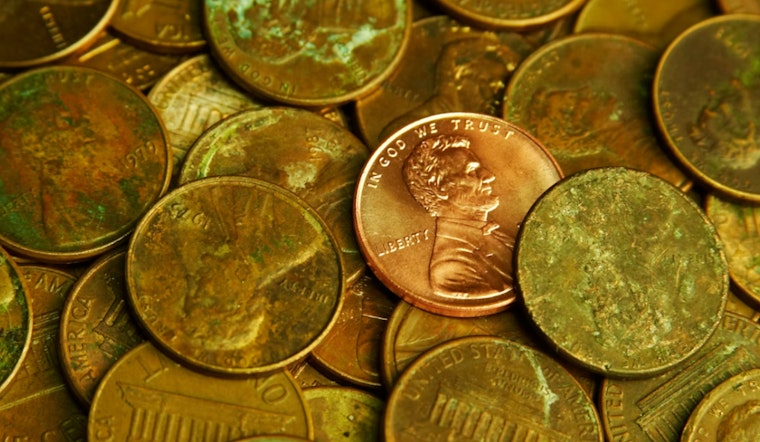
At a busy Queen Anne coffee counter, the penny jar is tapped out, and it is not just a minor annoyance anymore. A growing coin crunch is turning into a paperwork headache, and lawmakers in Olympia are trying to smooth it over with a simple fix: round cash purchases to the nearest nickel and move on with the day.
Under Senate Bill 6230, retailers would be allowed to round only cash totals to the nearest five cents, while card and other electronic payments would still ring up to the exact cent. That small tweak is already starting to shape how Seattle customers and clerks settle up at the register.
What lawmakers are proposing
SB 6230 spells out a very specific set of math rules for cash. The final price of any cash transaction would be adjusted so the total is divisible by $0.05, and the rounding would happen only after taxes, fees and discounts are all calculated. Totals ending in 1, 2, 6 or 7 cents would be rounded down, while totals ending in 3, 4, 8 or 9 cents would be rounded up. Those provisions are summarized in the Senate bill report.
Why pennies are disappearing
This whole debate starts in Washington, D.C. The Treasury and Mint have halted routine penny production after the unit cost climbed so high that it now takes roughly 3.69 cents to manufacture a single penny. By ending production, the department projects about $56 million in annual savings and has been nudging businesses and point-of-sale providers to get ready for fair rounding practices.
That federal guidance also recommends that rounding apply only to cash payments while electronic transactions continue to the exact cent, according to the U.S. Treasury. In other words, your debit card receipt still shows $4.27, even if your cash total gets bumped to $4.25 or $4.30.
Local merchants feel the pinch
On Queen Anne, the coin shortage is more than a theoretical policy problem. At Two Kick Coffee, manager June told FOX 13 Seattle the shop has been running low on exact change and is now flat out of pennies.
"Because most of the time, pennies are going out of here rather than coming in, we are currently just out of pennies altogether right now," she said. Other small retailers say they are taping up exact-change signs, asking customers to be patient, or steering people toward cards while coin inventories catch up.
How rounding would work at the register
Under SB 6230, rounding would always come after sales tax is calculated and would apply only to legal-tender cash. Mixed payments, like part cash and part card, would be handled under rules that the Department of Revenue would have to write.
In practice, that means a $1.03 cash purchase would be treated as $1.05 at the register, while a card purchase for the same item would still charge $1.03. Legislators and industry groups argue that having one clear statewide standard helps avoid ad-hoc rounding policies that could turn into accounting headaches for small merchants. The bill text details both that standard and the Department of Revenue’s role in implementing it.
What happens next
The measure has been working its way through committee this session and was scheduled for an executive session on Wednesday. It is crossfiled in the House as House Bill 2334.
If lawmakers sign off, the bill would take effect 90 days after the legislature adjourns, giving retailers and POS vendors a short window to update software and train staff. Sponsors say the goal is to provide short-term clarity while the state aligns tax and point-of-sale rules with the end of penny production, according to tracking at LegiScan.
For now, pennies are still legal tender, and the Treasury is urging the public to spend spare coins to ease the transition. But for small, cash-heavy businesses, clear state rules cannot come soon enough. The rounding itself is modest, yet for merchants who still handle a lot of cash, it is already changing the tiny bits of math that shape daily sales and those quick, sometimes awkward, moments at the counter.





