

























































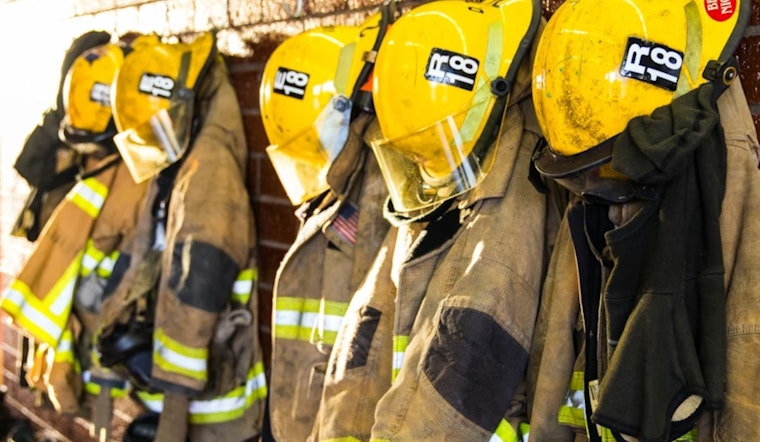
The Defense Department is standing by firefighting turnout gear that can contain PFAS chemicals, even as big-city fire departments move hard in the opposite direction and swap in non‑PFAS ensembles to cut cancer risks for crews. It is a collision between military readiness and supply‑chain limits on one side and a fast‑moving public‑health campaign, new testing rules, and local politics on the other. In the Bay Area, that split is not theoretical at all: San Francisco recently completed outfitting its firefighters with PFAS‑free gear, while the Pentagon continues to argue that safer alternatives remain scarce.
What the Pentagon is saying
In a statement to The Dallas Express, a senior Defense Department official said the Pentagon supports meeting the updated NFPA standard and is tracking what manufacturers are producing so it can fold PFAS‑free options into long‑term replacement cycles as they become available. That official also told the outlet the department believes there are currently only limited PFAS‑free options that meet the level of protection it says is needed for all military firefighting missions.
How the rules are changing
Industry rules have tightened in ways that are reshaping the market, even if they have not fully caught up with the public debate. The NFPA’s recent updates let manufacturers voluntarily certify low‑PFAS products and require testing of individual components, with an optional label tied to a total‑fluorine threshold that regulators and testing experts describe as a practical upper limit for now. Coverage of the standard and of the technical testing methods helps explain why some departments insist they can already order truly PFAS‑free gear while others say they want more supplier validation and real‑world wear data before betting their crews’ safety on newer materials.
Congress, the NDAA, and the legal patchwork
The fiscal‑year 2026 defense authorization became law in December 2025, and critics quickly noted what it did not include. The measure does not add new statutory limits on PFAS in military textiles or set a faster phase‑out schedule for turnout gear, leaving what they describe as policy gaps around how the services buy protective clothing. The law itself, along with FY2023 provisions that created a procurement restriction on equipment with intentionally added PFAS when sufficiently protective alternatives are available, has produced a complicated compliance window for the services. The enrolled text of the FY2026 NDAA is posted on Congress.gov, and the earlier procurement restriction language appears in Public Law 117-263.
How the military is measuring exposure
The Defense Health Agency and service public‑health teams say they are expanding testing and exposure work, including PFAS blood testing and research into dried blood‑spot methods, to better understand how much PFAS service members are actually carrying in their bodies and to guide medical follow‑up. The department says it is partnering with the VA and public‑health agencies on exposure research, and that some DOD firefighter units already receive PFAS testing as part of their occupational health exams. An overview of those testing efforts is posted on Health.mil, and recent reporting on limited PFAS‑free gear adoption pilots at specific military sites is available on Army.mil.
San Francisco shows a path forward
Closer to home, San Francisco finished a full department‑wide transition to non‑PFAS turnout gear late last year, following a multi‑vendor trial and backed by a FEMA Assistance to Firefighters Grant that helped cover the bill. The rollout, reported earlier by local outlets, depended on newer moisture‑barrier materials and multi‑week wear tests that convinced city officials and firefighters the next‑generation ensembles would hold up on real calls. Hoodline chronicled the PFAS-free gear switch, and the transition was also covered in the San Francisco Chronicle.
What manufacturers say
On the supply side, manufacturers and textile developers are blunt about the technical challenge. PFAS chemistries have long delivered the water, oil, and heat resistance that turnout gear is built around, and replicating that performance without them is not simple. Some companies, however, have rolled out alternative moisture‑barrier films and casings that they say allow fully non‑PFAS ensembles after extensive lab and field testing. Those innovations are the reason a handful of departments, including San Francisco, have already fully transitioned, as described in manufacturer statements and trade press coverage of commercial PFAS‑free offerings and the city’s procurement.
Firefighter health stakes
Firefighter health advocates and occupational researchers point out that cancer is now the leading cause of line‑of‑duty deaths in the U.S. fire service, and that multiple studies have found higher cancer incidence and mortality among firefighters than among the general public. That growing body of evidence is a central force behind local decisions to buy PFAS‑free gear where possible and behind the wider push for more robust testing and long‑term medical surveillance. For background on the occupational risk data and key studies, observers often point to work summarized by NIOSH and firefighter‑health organizations.
What’s next
Looking ahead, Congress has directed the Defense Department to provide briefings and strategy updates on how it plans to procure PFAS‑free textile technologies and how each service will maintain readiness while shifting materials. The department has said it will keep monitoring industrial capacity and availability as it phases in newer gear through existing lifecycle replacement schedules. Those briefings, along with results from the department’s PFAS exposure testing programs, are expected to help determine whether future procurement rules tighten further or continue to hinge on the availability of alternatives that commanders consider ready to field. Timelines and committee language on PFAS‑related work in the FY2026 cycle are detailed in Senate reporting posted on GovInfo.




