

























































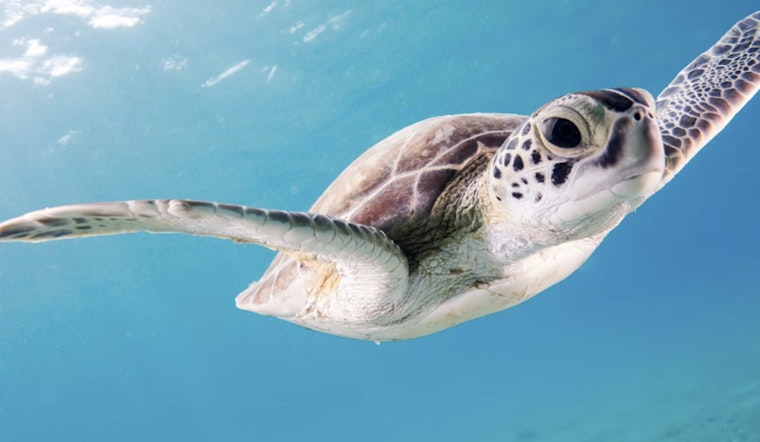
Standing on the Apollo Beach shoreline Thursday, Ocean Conservancy scientists and advocates delivered a blunt warning to reporters: Florida’s iconic marine wildlife is choking on our trash. From manatees and sea turtles to seabirds, dolphins and whales, they said animals are ingesting plastics at alarming and often lethal rates, turning everyday litter and lost fishing gear into a fast‑moving conservation crisis for the state’s beaches and waterways. The timing was not accidental, coming as Florida lawmakers debate new rules that could reshape how single‑use containers are regulated statewide.
Study puts numbers on lethal plastic doses
At the center of the warning is a landmark study in the Proceedings of the National Academy of Sciences, which analyzed more than 10,000 necropsies. Researchers found that nearly half of sea turtles, about a third of seabirds and roughly 12% of marine mammals in the dataset had plastic in their digestive tracts at the time of death. Even relatively small amounts of plastic significantly increased the odds an animal would die. The team modeled lethal thresholds that vary by species and by type of plastic: for some seabirds, just a few pieces of rubber are likely fatal, while for turtles and marine mammals, softer plastics and fishing gear carry outsized risks. The authors say those thresholds give policymakers concrete targets for cutting plastic‑related deaths.
From research to a policy call to action
Ocean Conservancy, which led the research effort, used its press materials to translate the science into a policy demand, warning that the quantities of plastic that can kill are “much smaller than you might think.” The group highlighted how common single‑use items such as balloons, plastic bags, food wrappers and discarded fishing debris keep turning up in necropsies. Community cleanups, while helpful, will never keep up with the pace of production, the group argued, calling plastic pollution a problem that starts at the manufacturing line, according to Ocean Conservancy.
What Florida’s plastics bill would actually do
All of this is colliding with CS/SB 240, a bill sponsored by Sen. Ileana Garcia (R‑Miami) and introduced Jan. 13, 2026. The measure would preempt local rules on “auxiliary containers” and instead direct the Department of Environmental Protection to design a statewide regulatory system, as detailed by the Florida Senate. The proposal would also require creation of a statewide Marine Debris Reduction Plan and give the state authority to prohibit the sale or distribution of certain single‑use containers on lands managed by state parks. Supporters say that setup would create a consistent framework for businesses. Critics counter that preemption could strip coastal communities of local tools they already rely on to cut beach litter.
That apparent tension between sweeping state preemption and new state park restrictions became a focal point at Thursday’s Apollo Beach event, where local advocates argued that in a place like Florida, small reductions in plastic can add up fast. With a packed coastline and a tourism economy that depends on clear water and clean sand, they said the stakes are especially high. Tampa Bay 28 reported that Ocean Conservancy representatives told the crowd “just a baseball-sized piece of plastic can kill an adult Florida manatee” and that the group convened the press conference at 11 a.m. Thursday in Apollo Beach.
Deadlines, plans and rulemaking on the clock
Under CS/SB 240, the Department of Environmental Protection would have to post a Marine Debris Reduction Plan on its website by December 31, 2026, begin stakeholder workshops no later than Oct. 1, 2026, and finalize a uniform ordinance template for local governments by Oct. 1, 2027, according to the Florida Senate. The bill directs the department to include recommendations on data collection, funding mechanisms and a competitive grant program aimed at helping local governments and nonprofits tackle marine debris. Those dates mean agency rulemaking and a series of public forums are likely to determine how, and how quickly, Florida moves on plastic pollution.
Advocates at the Apollo Beach event stressed that policy needs to move faster than volunteer trash bags can fill up. Ocean Conservancy’s release flagged the same items that cleanup crews routinely pull from the sand and surf, including balloons, bags, straws and food wrappers, and urged lawmakers to zero in on the most dangerous products while investing in basic waste‑collection infrastructure, per Ocean Conservancy. “When you pick up just a few pieces of plastic, you are helping to protect the life of a marine animal,” the organization added.
For Tampa Bay, the fight is as local as it is scientific. Beaches, fisheries and the region’s tourism engine all hinge on healthy water and visibly clean shorelines. With CS/SB 240 moving through the early session calendar and Ocean Conservancy taking its case straight to the waterfront, residents can expect a season of public workshops and committee hearings where local officials, business groups and conservation advocates lay out competing blueprints for how Florida should handle single‑use plastics.




