

























































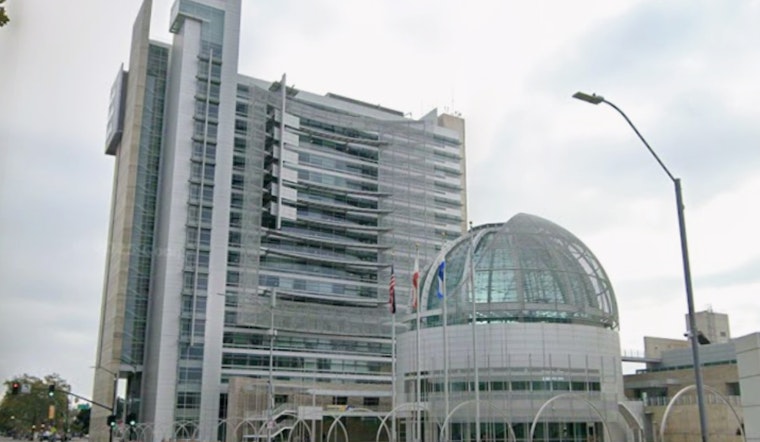
San José officials are scrambling to keep a huge slice of the city’s industrial backbone out of the state’s latest push for taller, denser housing near transit stops.
At last Tuesday's City Council meeting, members directed staff to draft an ordinance that they say would exempt roughly 6,600 acres, mostly in North San Jose, from the default upzoning rules in SB 79. City staff warn the state standard could otherwise touch about 40,000 parcels across San José and sharply increase allowed housing around some stations. The city has set an aggressive timetable to get any exemptions certified with state regulators before the law kicks in on July 1.
Staff memo shows big shifts at some stations
A Jan. 9 city staff memo mapped SB 79’s reach and used three station areas as case studies. The memo says the law would affect 56 transit sites and roughly 40,000 parcels in San José, according to the City of San José staff memo. The analysis shows the Snell Station area’s allowable capacity could jump from about 3,233 homes to roughly 37,153 under the state standards, while impacts vary at other stations.
Which neighborhoods the city wants to protect
Council members asked staff to pursue exemptions for six broad Employment Areas: North San Jose, Old Edenvale, the Monterey Business Corridor, East Gish, Mabury, and the Berryessa International Business Park. Together, the carve-out totals about 6,600 acres, according to San José Spotlight.
The concern on the dais was not subtle. Vice Mayor Pam Foley told the meeting, “This is a mess,” while Mayor Matt Mahan argued the city must protect scarce employment land because “the percentage of our land dedicated to employment use is quite small, around 13%.” In other words, city leaders are treating these industrial pockets like an endangered species.
Supporters and critics split over the scope
Local housing advocates are not marching in lockstep on how large the jobs sanctuary should be. Some groups pushed the city to back up any exemption with robust data and broad public outreach, while others warned the carve-out might be too sweeping.
SV@Home urged the Council to support staff’s overall direction but called for close monitoring of outcomes and more detailed analysis as the plan evolves. Land-use consultant Erik Schoennauer told San José Spotlight, “The question would be, is there a more surgical approach?” suggesting select parcels in North San Jose might still benefit from SB 79’s incentives. The fault line is clear: how much land gets wrapped in bubble wrap, and how much stays in play for new homes.
A tight timetable to meet the state deadline
To stay ahead of the state clock, staff has proposed a rapid-fire schedule: a draft referral to the state in early March, a Planning Commission hearing on March 11, and a Council vote on March 24. The ordinance is slated to take effect May 7, leaving a window for review by the state Department of Housing and Community Development (HCD) before SB 79 starts on July 1.
The city memo outlines the 90-day HCD review window and warns that staff may have little margin for delay if HCD requests more time. In other words, any hiccup could push San José uncomfortably close to the deadline. Those dates and review steps are detailed in the city staff memo.
State law and enforcement
SB 79 was signed by Gov. Gavin Newsom in October 2025 and sets statewide minimums for heights, densities, and floor-area ratios near qualifying transit stops, while allowing narrowly defined local exemptions that must be approved by HCD, as reported by CalMatters.
Legal analysts note that HCD can reject local ordinances that do not comply and has enforcement tools, including referral to the Attorney General, according to the National Law Review. Those enforcement powers make HCD signoff a critical hurdle for any San José exemption plan.
Bottom line: San José is racing a narrow calendar to turn broad Council direction into an HCD-approved ordinance that tries to balance housing production with protections for industrial jobs and tax revenue. Expect the fiercest debates to arrive at the March hearings, when the city will decide whether to fine-tune the map of exemptions or hold the line on preserving employment land. City staff say they will keep refining maps and outreach as HCD guidance and MTC’s official maps become available.





