

























































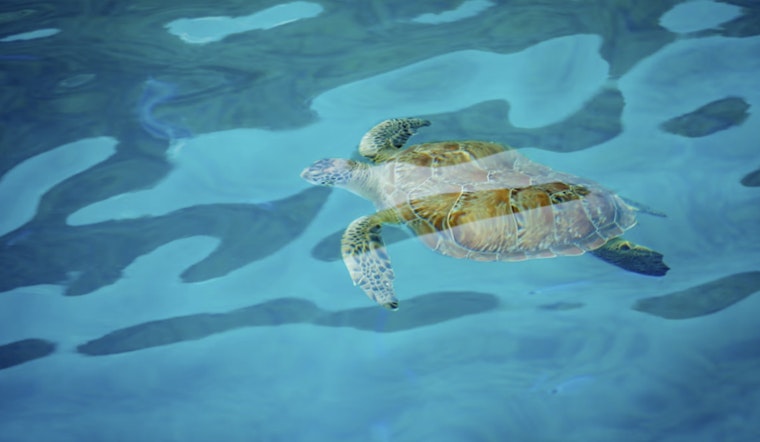
A rare February cold snap that chilled Florida waters has turned Mote Marine Laboratory in Sarasota into an emergency ward for sea life, with three rescued manatees and 25 cold-stunned sea turtles now under intensive care. Inside Mote’s Rehabilitation Hospital, staff are slowly warming the animals, administering fluids and keeping round-the-clock watch, part of a broader statewide response that has stretched rescue and rehab teams across Florida.
Mote admits 3 manatees, 25 turtles
According to WWSB, the hospital recently admitted 25 juvenile green sea turtles from Florida’s east coast, along with three juvenile manatees rescued from Bear Creek in Pinellas County. The manatees were recovered in two separate rescues, on Jan. 27 and Jan. 29. WTSP also shared video of Mote staff working to stabilize the animals as they arrived.
Mote steps in as other centers fill up
Mote was recently federally designated as a secondary care holding facility for manatee rehabilitation, and the lab says it has temporarily expanded its role to accept light‑critical cases while primary centers hit capacity, according to Mote Marine Laboratory. "Normally, they would go to a primary care facility because we were designated a secondary care facility," a Mote representative told WWSB, underscoring how unusual this surge has been.
Statewide surge stretches teams
The same cold blast that sent temperatures plunging along the Gulf and Atlantic coasts has rescue teams scrambling from the Panhandle down to the Space Coast. Gulf Specimen Marine Lab in Panacea has reported hundreds of cold‑stunned turtles crowding its facility, according to WUSF. The weather system also led to thousands of stunned iguanas being collected by state authorities, a stark example of how far-reaching the cold’s impact has been, The Guardian reported.
How vets treat cold‑stunned animals
Veterinarians treating cold‑stunned turtles and manatees typically rely on slow, carefully controlled rewarming, along with intravenous or subcutaneous fluids to fight dehydration. Antibiotics are used when infections are suspected, and animals must pass swim‑tests to prove they can dive and feed on their own before any release. National coverage of past cold‑stun events notes that pneumonia and dehydration are among the most common complications, often turning what might seem like a quick recovery into a much longer rehab stay, according to AP.
How to report a stranded animal
If you spot a sluggish or stranded sea turtle or manatee, officials say the worst thing you can do is try to move or warm it yourself. Instead, call the Florida Fish and Wildlife Conservation Commission's Wildlife Alert line at 1‑888‑404‑FWCC (1‑888‑404‑3922) and give the most precise location you can. In Sarasota and Manatee counties, Mote’s Stranding Investigations Program coordinates local responses, and both FWC and Mote Marine Laboratory offer detailed guidance and hotline information for reporting distressed marine animals.



