

























































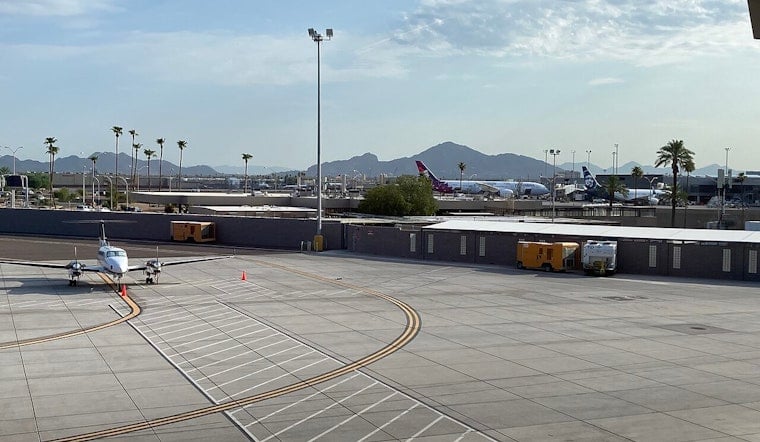
U.S. Transportation Secretary Sean Duffy swung through Phoenix Sky Harbor this week for a hands-on tour of newly installed radios and control-room systems that federal officials say will anchor a nationwide air traffic upgrade. The visit put Phoenix squarely in the spotlight as the federal government starts rolling out hardware, radar and surveillance changes meant to cut delays and prevent outages at some of the country’s busiest hubs. Local flyers told reporters they are hoping the effort translates into two concrete results: fewer cancellations and shorter taxi times.
In an exclusive interview with ABC15, Duffy said Phoenix "has some of the better technology in all of our airports" and that officials will use test cases at Sky Harbor to decide what to scale nationwide. He told the station the work is being funded in part by a $12.5 billion down payment in the "One Big Beautiful Bill" and that the next software phase will need additional congressional appropriations.
Upgrades at Sky Harbor
On the ground, the tour focused on visible, nuts-and-bolts swaps: decades-old radios, some dating back to the 1980s, have been taken out and replaced. Controllers demonstrated electronic flight strips that stand in for the old paper-based process, and airport officials showed off new surface-movement radar and a more resilient terminal voice switch. As ABC15 reported, the hardware work is meant to shore up communication and runway safety gaps while software updates follow later. Airport staff say those changes should make everyday delays less likely and give controllers more modern tools to manage traffic.
Newark outages that pushed urgency
Federal officials regularly point to last year’s temporary blackouts and radio glitches at major hubs, most notably the series of outages that hit Newark and snarled flights, as evidence that the system needs serious overhauling. Coverage by Forbes documented how short but repeated outages forced ground stops and raised safety concerns for controllers and airlines.
Funding, contractors and the rollout
The modernization push has an early $12.5 billion allocation to start replacing telecoms, radars and other core equipment, and the Department of Transportation has moved to centralize program management under a prime integrator approach. Reporting from E&E News and other outlets shows DOT has named a lead contractor and aims to accelerate deployments in the coming years, although officials acknowledge that finishing software integration will require additional appropriations from Congress. For Phoenix, that means the hardware pieces being tested now will help determine how quickly similar upgrades reach other hubs.
What this means for Phoenix travelers
For Phoenix passengers, the promise is straightforward: fewer cascading delays and fewer surprises on the tarmac. Airport leaders say the initial hardware work is already underway at Sky Harbor and that commuters should begin to see operational improvements as systems stabilize, if the technology performs as planned.





