

























































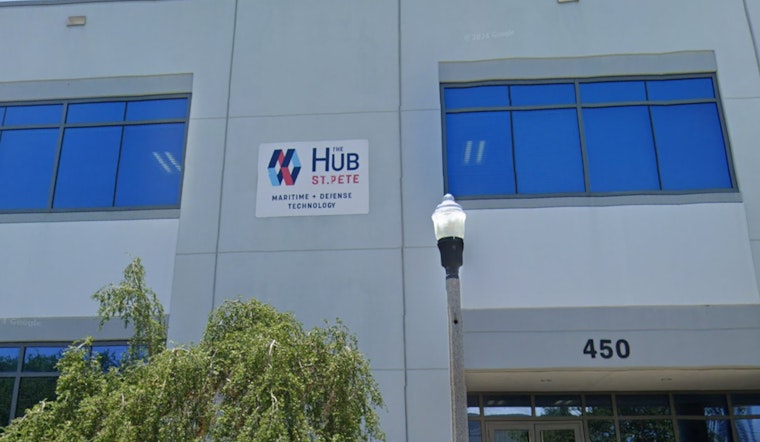
St. Petersburg is gearing up for a high-stakes vote on the future of its working waterfront. On Thursday, a City Council committee took the first formal step toward asking residents to approve a second building for the Maritime and Defense Technology Hub. The proposed Hub 2 is pitched as a roughly 52,000-square-foot, $30 million research and collaboration center that would rise on a surface parking lot next to the existing facility at the Port of St. Petersburg. Supporters say the expansion would boost waterfront testing access and draw more higher-paying marine science and defense jobs into the city.
The city’s Economic and Workforce Development Committee unanimously backed ballot language for a 25-year lease that would allow the Innovation District to develop the waterfront site. The measure still needs to clear a public hearing and a full council ordinance vote before it can land on the November ballot, according to Spectrum Bay News 9. Committee chair and Councilmember Gina Driscoll said, “This is going to create jobs,” and the Innovation District estimates full-time positions at the Hub average about $91,500 a year.
The Hub Today
The original Hub opened in 2022 in a repurposed SRI International building and spans about 32,386 square feet, including a Sensitive Compartmented Information Facility that has helped attract defense and maritime tenants. Managed by the St. Pete Innovation District, the building now hosts more than 20 organizations - a curated mix of private firms, nonprofits and academic partners - and is already operating close to capacity, according to St. Pete Catalyst.
What Hub 2 Would Add
Design plans for Hub 2 call for a 52,000-square-foot research and collaboration facility with shared workspaces, a rooftop terrace and a direct connection to the waterfront. The lobby is slated to feature what the Innovation District says would be the only NOAA 360-degree sphere in Florida. The project carries an estimated $30 million price tag, and district leaders say they intend to cover most of the cost with grants, supplemented by some tenant or private investment. Alison Barlow, the district’s CEO, told local reporters, “That is our goal,” referring to grant funding and limited private investment, according to St. Pete Rising.
Why Startups Are Pushing
Local founders say the Hub has evolved into a rare waterfront testbed for marine technology, and some entrepreneurs warn that without additional space, growing companies may be forced to look elsewhere. The Innovation District’s project description notes that the Hub is designed to bring industry, government and academia under one roof and that tenants are carefully selected for their ability to use port access, secure communications rooms and wet labs, as outlined by the St. Pete Innovation District.
Next Steps For Voters
From here, the proposal heads to a public hearing and council votes on an ordinance. If council signs off, the lease referendum will appear on the November ballot, putting the final call in voters’ hands. In the meantime, planners say they will chase grant funding and limited private investment while the city works through how to replace the parking spaces that would be lost to Hub 2, a timeline and funding approach detailed by St. Pete Rising.





