

























































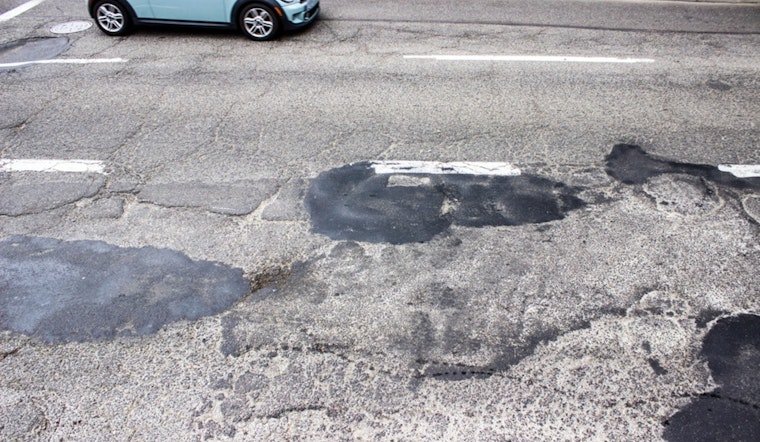
Portlanders who swear they can feel every bump in the road might not be exaggerating. City officials are warning that many streets have slipped into serious disrepair just as the bureau in charge of fixing them is watching its budget dry up. A newly updated pavement map and a sobering Portland Bureau of Transportation (PBOT) budget forecast sketch out a tough reality: major arterials are flagged as "very poor" and millions of dollars the city once expected may never arrive. PBOT is now taking that message on the road with a series of neighborhood open houses this month and next.
PBOT Forecasts Millions In Lost Funding
According to the Portland Bureau of Transportation, the agency can no longer count on roughly $10.6 million in FY25–26 and about $24 million in FY26–27 after recent shifts in state and federal funding. PBOT points out that the federal gas tax has not been increased in 32 years, and notes that many federal grants are locked to specific capital projects rather than day-to-day maintenance like repaving or pothole repair. The bureau also says it is entering its eighth consecutive year of budget cuts, a run that has chipped away at reserves and pushed preventive maintenance further into the future.
Citywide Pavement Map Flags Major Arterials
The bureau’s updated Citywide Pavement Map, released on Feb. 6, 2025, warns that "over half of our lane miles are in poor or very poor condition," according to the Portland Bureau of Transportation. Busy corridors such as Division, Powell, Burnside, Hawthorne and Killingsworth are listed among the streets needing major rehabilitation. The map relies on a Pavement Condition Index where scores of 0–25 are labeled "Very Poor" and 26–50 are "Poor," meaning many stretches will ultimately need full reconstruction instead of surface-level fixes. PBOT argues that this is why it is so anxious about timing, since delaying preservation work often sends total replacement costs through the roof.
Open Houses Set Across Council Districts
To walk residents through the choices ahead, PBOT has scheduled neighborhood open houses across the new council map: Feb. 19 at Rieke Elementary (District 4), Feb. 23 at Lent Elementary (District 1), Feb. 25 at Atkinson Elementary (District 3) and March 3 at Dr. Martin Luther King Jr. Elementary (District 2). Those dates and materials were shared by the bureau in a Portland Bureau of Transportation Facebook post.
Why The Shortfall Matters
Outside reporting has laid out what is at stake. Declines in parking and gas-tax revenues, along with the referral of a recent state transportation bill, have widened PBOT’s budget gap and could force cuts to paving work, safety projects, and jobs, according to OPB. City staff have already presented several revenue options to council committees and say they will use feedback from the open houses to refine any proposal before it heads to voters.
What Neighbors Are Likely To See
For people who live and drive in Portland, the funding crunch could show up as longer waits for routine maintenance and fewer rapid-response fixes as PBOT stretches limited dollars across more failing pavement. The bureau is pitching the coming weeks as a chance for Portlanders to weigh in on tradeoffs between preserving the streets the city already has and pursuing new projects, while officials fine-tune scenarios to bring back to the Council and the public.




