

























































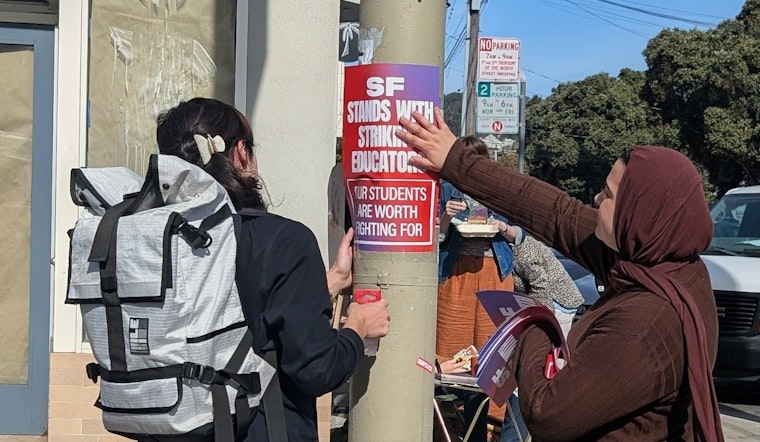
San Francisco's public schools will be closed Monday as teachers prepare to walk picket lines for the first time in nearly half a century—and despite last-minute political appeals from Mayor Daniel Lurie and Speaker Emerita Nancy Pelosi, the strike is moving forward.
The work stoppage—affecting all 48,000 students across the district's 111 non-charter schools—comes after weekend negotiations collapsed without reaching agreement on salaries, healthcare benefits, and special education staffing. With no further talks scheduled until noon Monday, according to the San Francisco Chronicle, families are scrambling to arrange childcare and meals for an indefinite closure.
Political Pressure Falls Flat
In a coordinated Sunday afternoon push, both Lurie and Pelosi urged the United Educators of San Francisco (UESF) to postpone the strike for 72 hours to allow more time for negotiations. The requests were promptly rejected. "We will be going on strike on Monday absent a signed agreement," union president Cassondra Curiel said at a 1 p.m. news conference, as reported by Mission Local. "We need to see serious movement."
Lurie didn't mince words in his Sunday evening statement. "I'm disappointed that the parties could not come to an agreement. And frankly, I'm frustrated — real progress has been made, and there are hours left in the day that should be spent working to keep schools open tomorrow," he said, according to the Chronicle. "There is no reason both parties can't be at the table right now figuring this out."
The Money Fight
At the heart of the dispute: the district offered a 6% raise over two years, matching recommendations from an independent fact-finding panel. But union officials say that offer came loaded with concessions—eliminating paid sabbatical leaves, cutting prep periods for Advanced Placement teachers, and removing department head planning time. Those perks currently cost the district $13.4 million annually for 186 educators, district data shows.
The union is demanding raises between 9% and 14% over two years, along with fully-funded family healthcare coverage. Currently, teachers pay about $1,200 monthly for family plans—costs that are expected to rise. The district countered with a $24,000 annual healthcare allowance that would cover employee-plus-one coverage under Kaiser, but the union wants permanent, comprehensive family coverage, according to SFGate.
Fiscal Crisis Context
Superintendent Maria Su has repeatedly emphasized the district's precarious financial position. SFUSD faces a $52 million deficit this year and projects a $32 million shortfall for 2026-27, the Chronicle notes. The district has been under state fiscal oversight since May 2024, with appointed trustees holding veto power over any spending—including labor contracts—deemed fiscally irresponsible.
The financial mess stems from years of enrollment declines (down to 48,000 from over 50,000), payroll system failures, and what state auditors called inadequate financial management. The district cut $114 million from its budget this year, including eliminating 500 staff positions, as The SF Standard reported.
Historical Echoes
The last San Francisco teachers strike was in 1979—a brutal seven-week standoff triggered by Proposition 13's devastating cuts to school funding. That strike saw more than 1,000 teachers laid off, schools operating with minimal instruction, and then-Mayor Dianne Feinstein stepping in to broker a settlement, according to The Standard's historical analysis.
Teachers today voted 97.6% to authorize the strike in late January. Not only will teachers walk out, but the United Administrators of San Francisco—representing principals and assistant principals—will join them in a sympathy strike, KQED reports. The janitors' union, SEIU 1021, is also participating.
What Families Should Know
The city will provide free meals at various locations on a first-come, first-served basis. Lurie urged families to check with their afterschool programs about extended hours and noted that libraries remain open—though children under 8 must be accompanied by an adult, per the Chronicle.
The union has invited parents and students to join picket lines, which will form outside schools Monday morning. How long the strike lasts is anyone's guess—recent California teacher strikes have ranged from four days (West Contra Costa in December) to nearly two weeks (Oakland in 2023), according to Chronicle reporting.
Blame Game Intensifies
As the clock ran out Sunday, both sides pointed fingers. District officials said they presented their latest offer Saturday at 8 p.m. and were ready to negotiate all day Sunday. Union leaders countered that they needed time to review the complex proposal and wouldn't negotiate until the district made "serious movement," The Standard reported.
Su said she was "deeply frustrated and disheartened" that no agreement was reached. Pelosi struck a diplomatic tone, saying teachers "deserve our support, our students need continuity and our families deserve certainty," the Chronicle notes.
For families waking up Monday morning, the message is clear: pack a lunch, find alternative supervision, and prepare for an extended disruption to the rhythm of daily life. The last time San Francisco teachers walked out, it took seven weeks to resolve. This time, both sides insist they want a quick resolution—but neither appears willing to blink first.





