

























































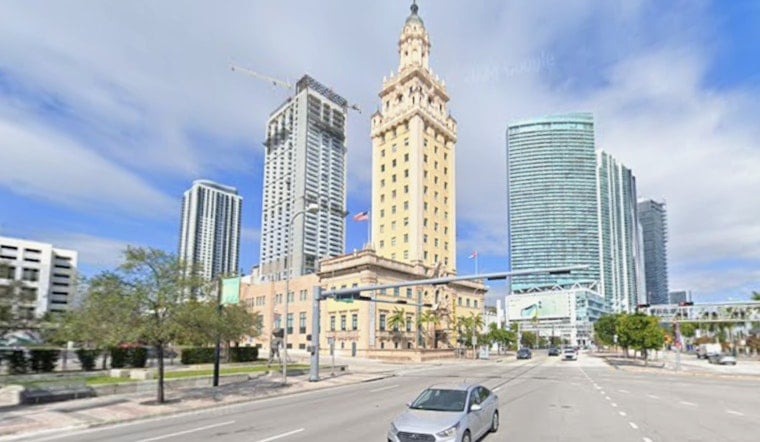
The Donald J. Trump Presidential Library Foundation is now the legal owner of a 2.6-acre slice of prime downtown Miami real estate next to the Freedom Tower, according to county property records. The deed was recorded this month after months of public hearings and a bruising court fight over whether Miami Dade College and state officials followed Florida’s open-meeting rules. Neighbors and preservationists have warned that putting the project this close to the Freedom Tower makes the decision especially combustible.
How the transfer happened
The Miami Dade College board first voted in September to convey the Wolfson Campus parking lot to the state. Days later, the Florida Cabinet voted to deed the site to the Donald J. Trump Presidential Library Foundation, according to the governor’s office. The college’s move to approve the contentious land transfer amid public divide had already drawn intense scrutiny.
County property records now list the foundation as the owner after a deed was recorded this month, per the Miami Herald. Official state agenda documents for the deal include a clause that some component of a presidential library, museum or center must begin construction within five years or the state could exercise reversionary rights, according to the board agenda and related filings.
Sunshine-law fight that slowed the deal
The conveyance was delayed by a lawsuit from activist Marvin Dunn, who argued that the college’s initial September vote did not give the public adequate notice, according to reporting from the Associated Press. Circuit Judge Mavel Ruiz temporarily blocked the transfer in October, then later dismissed a separate complaint after trustees re-voted in a publicly noticed meeting, the public radio station WLRN reported.
One courtroom item is still out there: a trial date listed for August 2026 in local filings and news coverage, keeping the legal story line alive even as the deed has changed hands.
Reaction from Trump allies and local critics
The foundation is treating the closing as a civic victory. Eric Trump said the future library “will be visible for miles into the Atlantic, a bold landmark on Miami’s skyline,” in a prepared statement reported by CBS Miami.
Opponents and some civic leaders see something very different. They argue that dropping a highly partisan presidential project next to the Freedom Tower, a symbol loaded with meaning for Cuban exiles, is tone-deaf at best, per coverage by the Washington Post and other local outlets. Former Miami Dade College president Eduardo Padrón and other critics have said the land was long intended for college expansion and broader public use, according to reporting.
What developers see and why value matters
The county appraiser pegs the parcel’s 2025 value at roughly $67 million, but developers and market analysts say the zoning, waterfront access and parking rules make it worth far more in the real world. Some have estimated its potential market value in the hundreds of millions, according to reporting by CNBC and other outlets.
That gap between official appraisal and possible market price has fed suspicions that the nominal transfer is less about guaranteeing a stand-alone museum and more about unlocking a lucrative piece of downtown. Local real-estate experts say the most likely high-rise scenarios would combine a library or museum component with hotel, retail or residential towers on the same footprint.
What comes next
With the deed recorded and the Donald J. Trump Presidential Library Foundation listed as owner, the next visible steps are likely to be design work, permit applications and any follow-up litigation. Public documents keep a five-year window on the clock for construction to begin, according to reporting and the board agenda.
Dunn has signaled that he intends to keep pressing his transparency claims that initially stalled the transfer, and legal observers say more challenges or appeals are still possible. For now, though, the 2.6-acre parcel sits under the foundation’s control, setting the stage for a long-running fight over downtown Miami’s future skyline and how a presidential library fits into a city with a sharply contested civic memory.



