

























































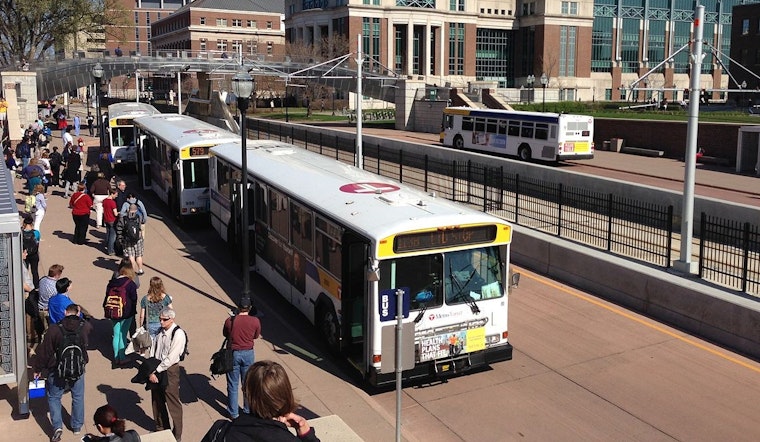
At the Capitol in St. Paul, state lawmakers are sharpening their pencils for some of the Twin Cities' priciest bus routes, leaning on a new regional analysis to argue that certain little-used lines are no longer worth the tab. During a recent House Transportation Committee hearing, members zeroed in on suburban "opt-out" systems and floated ideas for consolidating or restructuring routes that rely heavily on public subsidy.
Republican Rep. Jon Koznick, the committee's co-chair, argued the current subsidy levels "definitely cannot continue" and called them "an abuse of taxpayers." He signaled that draft legislation will look to eliminate the highest-subsidy routes and cut overhead. As reported by the Star Tribune, lawmakers said the bill would likely focus on agencies including Plymouth Metrolink, Maple Grove Transit, SouthWest Transit and the Minnesota Valley Transit Authority.
The Metropolitan Council's high-subsidy review flagged 28 regular routes in 2024 that met its threshold for "restructure or elimination" and estimated those services cost about $23.3 million to run that year. The report, which lawmakers ordered, showed dramatic differences in per-passenger subsidies: MVTA's Route 498 clocked in at roughly $201.11 per rider in 2024, while Metro Transit’s D Line handled nearly 3.5 million rides with a subsidy of about $5.14 per trip. According to the Metropolitan Council, the analysis breaks those figures down by route, service day and provider.
Suburban operators pushed back at the hearing, arguing the snapshot in the report is already out of date because they have been cutting and tweaking routes on their own. MVTA Executive Director Luther Wynder told the Star Tribune that "we pull it" when a route does not work and that more than half of the high-subsidy services identified have already been discontinued or suspended. MVTA's own numbers show the agency recorded about 1,538,182 trips in 2025, a 7.8% jump over 2024. Those program and ridership figures come from a recent MVTA statement and coverage in the Star Tribune.
At the same time, opt-out agencies are lobbying for a different solution. Rather than seeing routes carved up or folded into regional service, they want a statutory share of the metropolitan three-quarter-cent transit sales tax. SouthWest Transit has circulated materials at the Capitol urging lawmakers to back bills such as HF3301/SF3498 and to keep independent suburban systems intact, arguing that a formula-based carve-out in law would provide predictable funding for those services. The agency's packet and outreach are part of a broader push by suburban providers to lock in clear, stable funding in state statute, and their materials are available online.
What Lawmakers Can Do
On the menu are options that range from trimming or folding specific routes into Metro Transit service, to merging entire agencies, to writing a sales-tax formula that guarantees opt-out systems a set slice of revenue. Lawmakers ordered the Metropolitan Council analysis in last year's HF14, which required detailed per-passenger subsidy calculations and projected savings. The council then presented its findings to the House Transportation Committee in mid-February. For the underlying legislation and a committee recap, see HF14 and the House session write-up on House Session Daily.
So far no bill has been formally introduced, and committee members say they are still trying to balance route coverage with cost control. Koznick's office has released statements describing the panel's intent to reduce subsidies while preserving essential mobility for riders. Specific proposals are expected to surface as the legislative session moves ahead. For Koznick's memo and additional committee material, lawmakers have directed interested parties to his member news release.



