

























































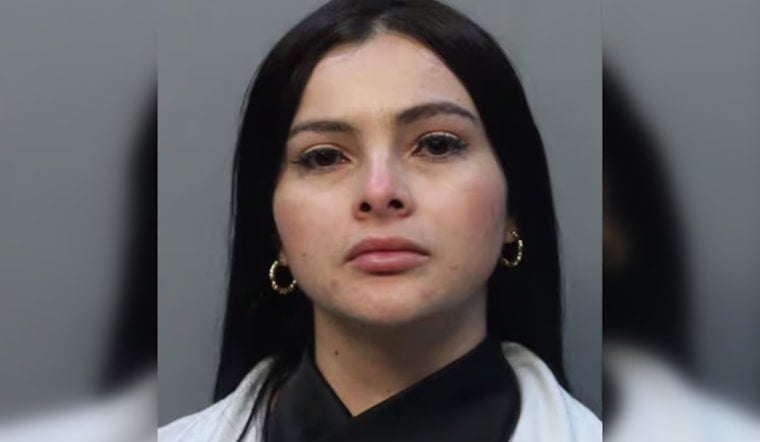
Valentine’s Day touch-ups in Brickell ended with handcuffs instead of smooth foreheads when a Miami woman was arrested after authorities say she posed as a doctor and nearly injected an undercover Florida Department of Health investigator with Toxta, a botulinum toxin product that is not authorized for use in the United States. The suspect, identified as 31-year-old Mayling Maya-Giraldo, was taken into custody inside a 15th-floor office suite after an appointment that investigators say had been arranged online.
According to Local 10, Maya-Giraldo had been advertising cosmetic injections on Instagram under the handles “dra.mayling.stetic” and “mayling.stetic.” She promoted a Valentine’s Day “Botox” special for $450 and scheduled a 3 p.m. appointment at 175 SW 7th Street in Brickell, records state. Deputies with the Miami-Dade Sheriff’s Office organized crimes bureau and a Florida Department of Health medical quality assurance investigator say they went into the suite and arrested her shortly after 3:10 p.m. The arrest report notes that the vial she allegedly planned to use was identified as Toxta, described as a foreign, unapproved product from South Korea that requires a prescription. Booking logs show she was processed later that evening at Turner Guilford Knight Correctional Center.
Toxta flagged as an unapproved product
Federal regulators have been sounding the alarm for months about unapproved botulinum toxin products sold online. In November 2025, the U.S. Food and Drug Administration issued warning letters to more than a dozen websites offering unapproved or misbranded products. According to the FDA, these products have been linked to reports of serious adverse events, including symptoms consistent with botulism, and are supposed to be administered only by licensed professionals using authorized products. The agency also urges consumers to report any adverse events to its MedWatch program.
Legal stakes for unlicensed injectors
Under Florida Senate statutes, practicing medicine without a license is a third-degree felony that can bring prison time and fines, with tougher penalties when unlicensed practice leads to serious bodily injury. Beyond criminal charges, the state can pursue administrative discipline and revoke licenses for those who violate medical practice rules. Prosecutors and licensing boards have stepped up enforcement as unregulated cosmetic injections have become more common in South Florida.
How to check a provider
Consumers can confirm whether a provider holds an active Florida license through the state’s Medical Quality Assurance search portal, which lists license status and any disciplinary history, according to the Florida Department of Health. Patients are advised to ask to see credentials, request the product’s lot number and packaging, and be cautious about unusually low prices or pop-up style clinics. If you suspect someone is practicing without a license or you experience an adverse reaction, you can file a complaint with the Department of Health and report problems to the FDA’s MedWatch system.
Authorities say the investigation is still ongoing, and it was not immediately clear whether any additional charges have been filed beyond what is listed in the arrest report. Officials are reminding Miami-area residents who are booking cosmetic injections to verify both their provider and the products being used before they get in the chair.





