

























































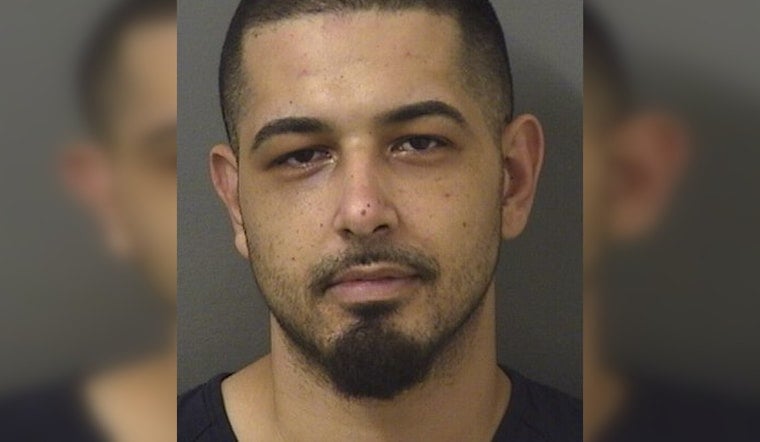
A 33-year-old West Palm Beach man accused of siphoning $190,788.91 from his employer allegedly tried to dodge investigators by claiming he was in a coma following a severe accident. Police say the excuse was a lie designed to buy time while a Riviera Beach embezzlement investigation closed in on him.
Bahaa Abughalia was hired in January 2026 to manage accounts payable for an unnamed local business, according to court documents cited by WPEC. Court records show he began missing work frequently and eventually asked to work remotely, claiming his young son was ill. Not long after, he stopped coming to work altogether, and company vendors began complaining that invoices had gone unpaid for three months.
Investigators say Abughalia wired roughly $200,000 in company funds into a series of online accounts he controlled, setting up five to six separate accounts, including one on Cash App, to move the money. Law enforcement subpoenas later linked those fraudulent accounts directly back to his personal identity, according to police. Bank and cryptocurrency records tied to the accounts reportedly included his selfie verification, driver's license, email address, and phone number.
A Coma Claim That Didn't Add Up
According to a police report, the company owner received a text on April 9, 2026 claiming Abughalia was in a coma after a severe accident. But company IT personnel had discovered he logged into his work computer just one day earlier, on April 8, undercutting the timeline of his supposed hospitalization.
When Riviera Beach Police Department officers visited Abughalia's West Palm Beach residence in June, he allegedly refused to return home while law enforcement was present and told his wife to tell officers he was in the hospital. His wife, who was in the middle of a divorce from him at the time, told investigators she did not send the fake emergency text messages herself. She said a friend of Abughalia's had sent them instead, per investigators.
Bank Review Flags Millions More
A Bank of America review reportedly turned up more than $3.4 million in high-dollar transaction credits flowing through Abughalia's personal account over the course of a single year, a figure far larger than the embezzlement amount currently charged. It remains unclear whether that larger sum reflects a broader financial scheme or unrelated activity.
Abughalia was eventually booked into the Palm Beach County jail. He faces charges of organized fraud, grand theft over $100,000, and obtaining personal property with intent to defraud, per the Riviera Beach Police Department's investigation.
What the Charges Could Mean
Under Florida Statute 812.014(2)(a), grand theft of property valued at $100,000 or more is a first-degree felony punishable by up to 30 years in state prison and a maximum fine of $10,000, according to attorney Richard Hornsby. Separately, organized fraud involving an aggregate value of $50,000 or more also carries a statutory maximum of up to 30 years in prison under Florida Statute 817.034(4)(a), Hornsby notes.
Statewide judicial data compiled by FloridaCourtFile shows fraud charges in Florida carry a 65.7% guilty rate, while courts grant adjudication withheld in 20.2% of fraud cases. Whether Abughalia's case follows either path will depend on how the pending prosecution unfolds.
A Familiar Pattern in Small-Business Fraud
Cases like this one fit a broader pattern documented by fraud researchers. The Association of Certified Fraud Examiners' 2024 Report to the Nations found asset misappropriation present in 89% of occupational fraud cases worldwide, with a median loss of $120,000 per scheme. The same ACFE research found these schemes typically run about 12 months before detection, with victim organizations losing an average of $9,900 per month while the theft continues unnoticed — a timeline that roughly tracks the months of unpaid vendor invoices that preceded scrutiny of Abughalia's accounts.
Small businesses are especially exposed. Research from WhippleWood CPAs found organizations with fewer than 100 employees suffer a median loss of $141,000 per occupational fraud scheme, often because a single employee handles both vendor invoices and payment disbursements without additional oversight. The ACFE has also found that while cryptocurrency appears in only about 4% of occupational fraud cases overall, nearly half of those cases involve fraudsters converting stolen business funds into digital assets — a detail that echoes the Cash App account investigators say Abughalia used to move company money.
The case adds to a string of recent Palm Beach County financial crime investigations. Hoodline previously reported on a Palm Beach County real estate executive accused of siphoning $11 million from escrow accounts, as well as a separate Riviera Beach search warrant tied to a grand theft and scheme-to-defraud probe involving digital transaction tracking. It remains unknown what company Abughalia worked for, who exactly sent the fake emergency texts on his behalf, and whether the $3.4 million flagged by Bank of America points to a larger scheme beyond the current charges.




