

























































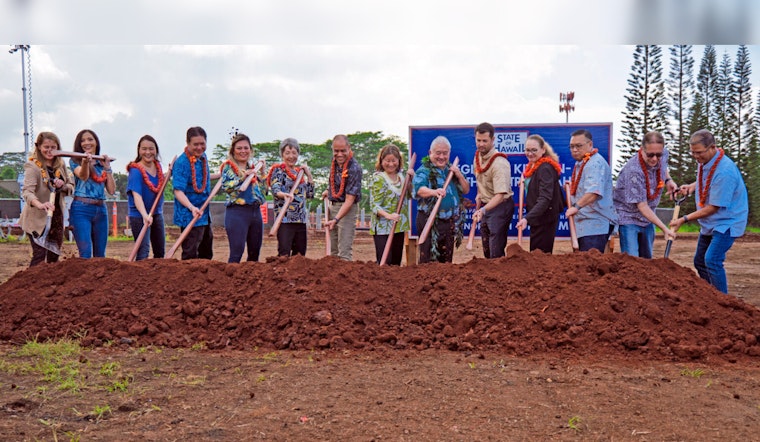
State and local leaders gathered this week in Wahiawa to officially kick off construction of a regional “mega kitchen” in Whitmore Village, a three-phase facility that aims to overhaul how public school meals are made across Oahu. The Whitmore Village kitchen, the first project in the AINA (Advancing Innovation in Nutrition for All) Kitchen Network, is expected to eventually crank out up to 60,000 meals a day for dozens of Central and West Oahu campuses. Officials say the project is meant to streamline operations, boost the use of locally grown ingredients and provide a steadier market for Hawaii farmers, as reported by the Hawaii State Department of Education.
Phase I is planned as an 18,000-square-foot production kitchen designed to produce about 12,000 meals per shift, or roughly 24,000 meals a day on two shifts. The facility will sit inside the new Central Oahu Agriculture and Food Hub on a 34-acre parcel in Whitmore Village, according to the Hawaii State Department of Education. “This groundbreaking is more than a kitchen, it is about building a healthier, more resilient Hawaii,” First Lady Jaime Kanani Green said at the ceremony, according to the department.
Capacity and Coverage
The buildout is planned in three phases that will expand the kitchen from 18,000 to 30,000 and then 45,000 square feet. Phase II is designed to produce 20,000 meals per shift, or about 40,000 meals per day, and Phase III is expected to reach 30,000 meals per shift, or about 60,000 meals per day. Once fully completed, the regional kitchen is projected to serve 86 campuses across Central and West Oahu, including the Leilehua-Mililani-Waialua and Nanakuli-Waianae complex areas, according to Maui Now.
Costs and Timeline
The Department of Education pegs the Phase I design-build contract at roughly $28 million, with total construction across all three phases projected at about $130 million. Phase I is expected to be completed by June 2027. The department plans for the Whitmore facility to begin feeding students in the Leilehua-Mililani-Waialua complex in the 2027-28 school year, with a phased rollout to additional campuses after that, according to the Hawaii State Department of Education.
Local Sourcing and Scale
The Hawaii Department of Education already serves more than 103,000 meals to students statewide on a typical school day, according to Maui Now, and officials say centralized production should make it easier to increase purchases of local food. The state has set a target of sourcing 30 percent local ingredients by 2030, but public reporting currently places local purchases in the low single digits, a gap that proponents say a large central kitchen can help close. Hawaii Public Radio has examined those goals and the logistical hurdles they pose for both farmers and schools.
Farmers and Funding Questions
Supporters argue that having a reliable institutional buyer will give growers confidence to scale up production, and leaders with the Hawaii Farm Bureau have welcomed the predictability that a centralized model could provide. At the same time, watchdogs and some lawmakers are pressing for clearer budget details. Civil Beat reports that the department plans to seek roughly $30 million more to retrofit about 19 Central Oahu school kitchens so they can receive centrally prepared meals, and that budget documents show the DOE purchased less than 5 percent of its food locally in 2024. Lawmakers are expected to weigh those requests and figures during the upcoming legislative session.
What To Watch Next
Education officials say the rollout will start with a handful of schools in the Leilehua complex before expanding across Central and West Oahu. In the months ahead, the department will seek the necessary appropriations and retrofit approvals from the Legislature. Local leaders and the Agribusiness Development Corporation are set to play central roles as the project moves from ceremonial shovels in the ground to full construction and, eventually, daily service for students, according to Hawaii News Now.



