

























































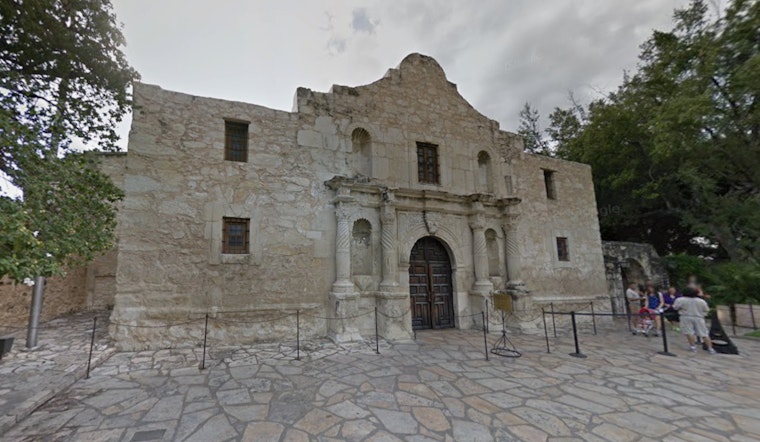
Archaeologists working just outside the Alamo Church had a spine-tingling moment on March 5, when they pulled a fully intact, solid bronze cannonball out of the ground from the 1836 battle layers. The four-pound projectile was buried about three feet below the surface in an undisturbed deposit, which lets researchers link it closely to the famous siege. The find came during active excavations that are part of the mission's long-running preservation and expansion work.
Archaeologists describe the find
"I have chills now, just thinking about it," said Dr. Tiffany Lindley, the Alamo’s director of archaeology, recalling the moment the cannonball appeared, as reported by FOX 7 Austin. The discovery was first shared on the Alamo's podcast and in site updates, and team members say recovering the ball from what they call a "clean deposit" gives it an especially strong connection to March 1836. Conservators say the object's condition is exceptional for something that has sat under city soil for nearly two centuries.
Material clues point to which army fired it
"The Mexican Army is using bronze cannonballs and largely the Texans are using iron cannonballs," Kolby Lanham, the Alamo's senior researcher and historian, told FOX 7 Austin. During the same excavation, the team also recovered four fragments of exploding shot, three bronze pieces and one iron piece, that appear to be from howitzer rounds fired during the siege. Researchers plan to run metallurgical tests and trajectory modeling to sort out sizes, launch points and likely impacts.
Part of a $550 million preservation push
The find drops right into the middle of the Alamo Plan, a roughly $550 million preservation and expansion effort that has spurred new digs and construction across Alamo Plaza, as outlined by The Alamo. The Alamo Trust notes the site remains an active archaeological zone where visitors can watch crews at work, and artifacts recovered during the project will help shape exhibits in the upcoming visitor center and collections spaces. Officials say small discoveries like this cannonball help flesh out the artillery story that will anchor future displays.
For now, the bronze ball joins a growing catalog of combat-era munitions recovered around the shrine, while conservators decide how best to stabilize it and eventually present it to the public. Archaeologists say the cannonball and howitzer fragments could change how experts map artillery arcs and interpret the Alamo's final hours for the 190th anniversary and well beyond.




