

























































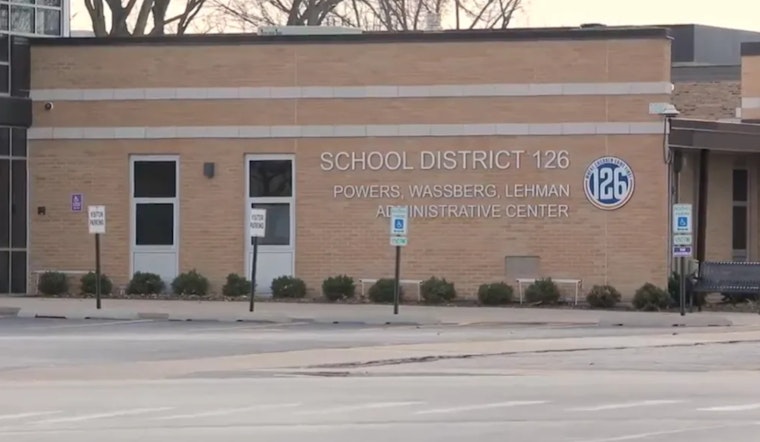
In Alsip, a southwest Chicago suburb, a mother says her local school district refused to enroll her daughter after automated license-plate scans flagged overnight trips into the city.
Thalía Sánchez says she moved into her Alsip home more than a year ago and turned over a stack of proof: a mortgage statement, utility bills, vehicle registration and her driver’s license. Even so, she says Alsip, Hazelgreen & Oak Lawn School District 126 repeatedly rejected her new-student registration. According to Sánchez, school officials told her that license-plate reader software showed the family’s vehicle "appearing overnight at Chicago addresses" during July and August 2025.
District’s Contract and How the Data Came Into Play
Public records reviewed by local reporters show District 126 signed a 36-month agreement for Thomson Reuters CLEAR, paying $41,904 for the service. The contract began in December 2024. Emails and enrollment denials obtained through those requests show district staff citing CLEAR’s license-plate findings when they questioned Sánchez’s residency, according to NBC 5 Chicago.
What CLEAR Is Built to Do
Thomson Reuters markets CLEAR as an AI-assisted records and locating platform that links nationwide location information, including surveillance camera license plate recognition data, to vehicle ownership records in order to build pattern-of-life insights for investigations and residency checks. Company materials highlight school-focused uses, from locating unhoused families to speeding up residency verification. Those descriptions appear on CLEAR product pages for public-sector customers, according to Thomson Reuters.
State Scrutiny and the License-Plate Privacy Fight
Illinois officials have recently stepped up audits and restrictions on automated license plate reader data after uncovering instances where camera networks shared information with federal agencies in ways state leaders said could violate Illinois law. That enforcement push has led to orders cutting off some data sharing and reviews of vendor practices, a reminder that access to plate-reader feeds in Illinois is not a free-for-all. The Secretary of State’s office has publicly detailed audits and steps to block unlawful sharing, per the Illinois Secretary of State.
Parent’s Story and Unanswered Questions
Sánchez says there is a simple explanation for those Chicago hits: she loaned the car to a relative last summer, which is why the vehicle showed up in the city during that stretch. She says the car is now back in her Alsip driveway, but her family is attending private school while the registration dispute drags on.
Local reporting describes online portal notes and emails in which district staff point to license-plate reader results as the basis for denying enrollment and notes that Thomson Reuters has not publicly detailed where it pulls its license-plate feeds from. Those follow-up reporting details were examined by The Register.
What Families Can Do if Their Residency Is Challenged
Families who run into residency disputes with a district typically have several ways to push back. They can request the district’s supporting evidence through the Freedom of Information Act process, submit additional proof of address through the online registration portal and raise the issue directly at school board meetings where residency policy is discussed.
District 126 posts registration requirements, contact information and school board meeting dates on its official website for parents working through enrollment questions, according to Alsip Hazelgreen & Oak Lawn School District 126.
The Alsip dispute has thrown a bright local spotlight on a broader trend: school districts buying commercial, surveillance-adjacent tools to handle what used to be fairly routine administrative checks. With Illinois auditors already probing ALPR networks and vendor practices, the way this family’s fight eventually ends could help decide whether other districts lean harder on automated checks or back away until the rules and the transparency catch up.





